Star Myths of the World: The Hymn to Durga in the Mahabharata

Star Myths of the World: The Hymn to Durga in the Mahabharata

If the evidence presented in previous discussions for concluding that the Bhagavad Gita and the ancient Sanskrit epic Mahabharata which contains the Gita was not enough to convince the most skeptical reader that these ancient scriptures are indeed Star Myths, built upon the same system of celestial metaphor that can be shown to form the basis of virtually all of the myths, scriptures and sacred stories around the world (see here for links to evidence found in myths from ancient Japan to the Maya, from Africa to Scandinavia, and from the Old and New Testaments of the Bible as well as the myths of ancient Greece and ancient Egypt), the new video above examines another powerful and decisive piece of evidence from the Mahabharata: the episode prior to the great battle of Kurukshetra in which Lord Krishna urges the great warrior Arjuna to utter a hymn to Durga.

Entitled "Star Myths of the World: the Hymn to Durga in the Mahabharata," the video shows that this direction from Krishna to seek out the great goddess Durga helps confirm that the great battle in that ancient epic is indeed a metaphor for the endless interplay and "struggle" between the visible material world and the invisible world of spirit which is taking place in the universe around us and indeed within us at all times in this incarnate human existence.

There are abundant clues throughout the Mahabharata that the entire epic uses the endless cycles of the heavenly bodies -- the sun, the moon, the visible planets, and especially the stars -- to convey profound truths about the nature of our incarnation in this material plane, and about the existence and importance of the unseen realm.

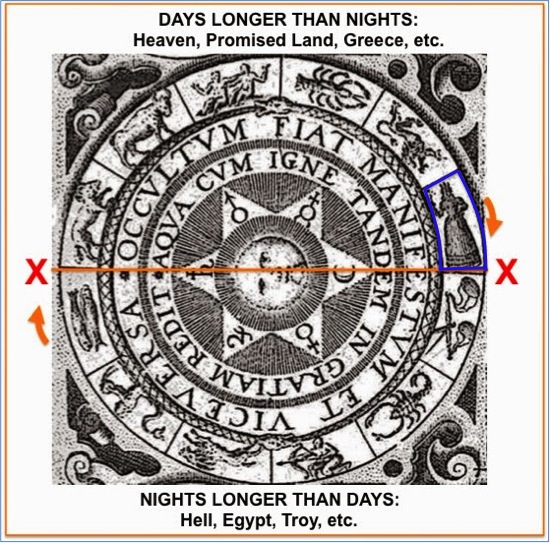
Just as the Bhagavad Gita itself is presented as the song and counsel of the divine Lord Krishna to the semi-divine bowman Arjuna prior to descending into the great struggle, in the two sections of the Mahabharata immediately prior to the Bhagavad Gita we see Krishna telling Arjuna to utter his hymn to Durga -- and it can be conclusively shown that the goddess Durga is replete with imagery associated with the sign and constellation of Virgo the Virgin, the very sign which is located immediately prior to the autumnal or fall equinox on the great wheel of the zodiac: the point at which the sun's arc "crosses down" into the lower half of the year, towards the winter months and the December solstice, the half of the year in which darkness reigns and nights are longer than days, the half of the year associated with incarnation in this "lower world" of matter, when the soul clothes itself in bodies made of the lower elements of earth and water.

Thus the sign of Virgo (outlined in blue on the zodiac wheel shown below) truly does stand at the very "eve of battle" -- the final position before the plunge into the struggle of incarnate existence:

The goddess Durga, whom we can see to be associated with the sign and constellation of Virgo using the superabundant clues and references provided in the Hymn to Durga uttered by Arjuna at Krishna's request in Mahabharata Book 6 and Section 23, thus can be seen as preparing the soul for incarnation, sending the soul into battle, and (as we see in the events described in this section, in which Durga herself appears to Arjuna and gives him blessing and encouragement for the struggle) as the one who guides the soul along the difficult path and promises that the struggle will not be in vain.

More than that, however, the contents of the hymn identify the goddess Durga as "identical with Brahman," and the one who supports the Sun and the Moon and makes them shine: in other words, as the infinite and undifferentiated and eternal Cosmic Principle, the undefinable and the un-namable -- just as we see in the Bhagavad Gita the Lord Krishna declares himself (and reveals himself) to be.

And yet she is immediately available to Arjuna, and appears when he utters his hymn to the Goddess. This indicates that we, the human soul embarked upon this journey of incarnation, in actual fact are in the presence of the ultimate and the infinite at all times -- and that we have access to the supreme and undifferentiated and undefinable at all times as well.

And perhaps this is why at the end of the section describing the directive from Krishna to Arjuna to utter his hymn to Durga, and giving the contents of the hymn itself and the results (the appearance of Durga to Arjuna, and her promise to him that he shall conquer, that he is in fact invincible, and that he is incapable of being defeated by his foes), the text of the Mahabharata tells us to recite this same hymn every day, and to do so when we rise, "at dawn."

In doing so, we are focusing upon the infinite and connecting with the infinite: transcending the "chatter" of the mind and the senses (which are endlessly defining, and partitioning, and assessing, and evaluating -- all important and necessary functions, but functions that can keep us from being in contact with that undifferentiated and undefinable infinite which we in fact can and do have access to at all times and in all places, even in our incarnate situation).

By beginning each new day connecting with this ultimate principle, who is in fact always with us, the Mahabharata promises that we "can have no enemies," and "no fear," freedom from animals that attack with their teeth -- and "also from kings" -- victory in all disputes, freedom from all bonds, from thieves, and the enjoyment of victory in every struggle.

image: Wikimedia commons (link).

For more on the importance of hymns and chanting of praise, see also:

and

Star Myths of the World: The Bhagavad Gita

Star Myths of the World: The Bhagavad Gita

Here's a new video I made for you entitled "Star Myths of the World: The Bhagavad Gita."

The Bhagavad Gita is specific section of an ancient Sanskrit epic, the Mahabharata, which -- on a literal level -- appears to be primarily concerned with a massive battle between two different branches of the same family, in much the same way that the Iliad of ancient Greece appears (on a literal level) to be primarily concerned with a massive battle between the Achaeans (or Danaans) and the Trojans of the windswept city of Ilium.

The Mahabharata is overflowing with human and divine characters and with adventures, battles, love scenes, and stories within stories. It consists of over 100,000 couplets of poetry, and because a "couplet" by definition is two lines of poetry, that means it has over 200,000 individual lines. For comparison, the Iliad has almost 15,700 lines and the Odyssey has just over 12,000 lines.

The Mahabharata is most particularly well known because it contains an extremely significant and beloved and revealing section known as the Bhagavad Gita -- "the Song of the Lord."

The Bhagavad Gita takes place in the overall epic of the Mahabharata as two great armies are drawn up for battle upon the sacred plain of Kurukshetra, and between these two armies (the Pandava, descended from Pandu, and the Kaurava, descended from Kuru), the great bowman Arjuna and his divine charioteer, who is none other than the Lord Krishna himself, ride out to have a discourse on the meaning of life, dharma, karma, incarnation, reincarnation, consciousness and enlightenment.

Arjuna is one of the leaders of the Pandava, but he is suddenly having second thoughts about the battle, because he knows that many of his close kin including cousins, uncles, and teachers are on the other side, and he expresses the belief that it would be better for him to throw aside his bow and arrows and allow himself to be killed, rather than participate in such a war.

Krishna responds by telling Arjuna that the right thing to do is for Arjuna to do his duty, engage in the struggle, act according to what is right, and to renounce attachment to the results.

Lord Krishna gives this message to Arjuna in many different forms throughout the eighteen sections of the Bhagavad Gita.

Here are some representative passages from Krishna, telling this to Arjuna (from the translation available online here; another version can be found here):

Do your duty to the best of your ability, O Arjuna, with your mind attached to the Lord, abandoning worry and attachment to the results, and remaining calm in both success and failure. The equanimity of mind is called Karma-yoga. Work done with selfish motives is inferior by far to the selfless service or Karma-yoga. Therefore be a Karma-yogi, O Arjuna. Those who seek to enjoy the fruits of their work are verily unhappy (because one has no control over the results) (2.48 - 2.49).

And again:

Therefore, always perform your duty efficiently and without attachment to the results, because by doing work without attachment one attains the Supreme (3.19).

And also:

The ancient seekers of liberation also performed their duties with this understanding. Therefore, you should do your duty as the ancients did. Even the wise are confused about what is action and what is inaction. Therefore, I shall clearly explain what is action, knowing that one shall be liberated from the evil (of birth and death). The true nature of action is very difficult to understand. Therefore, one should know the nature of attached action, the nature of detached action, and also the nature of forbidden action. Attached action is selfish work that produces Karmic bondage, detached action is unselfish work or Seva that leads to nirvana, and forbidden action is harmful to society. The one who sees inaction in action, and action in inaction, is a wise person. Such a person is a yogi and has accomplished everything (4.15 - 4.18).

Now, I believe that these words take on even greater meaning for us when we realize that this famous sacred text is not in fact about an ancient warrior who is preparing to engage in a bloody battle, but that it is actually about each and every human soul, figuratively contemplating the awful descent into incarnation, and the struggle of human life.

The battlefield being described in the Mahabharata is not a physical battlefield but represents the interplay, the give-and-take, the struggle between the physical world and the unseen spirit world, which exists in every aspect of the cosmos in which we find ourselves, and exists within each of us as well. 

When we come into this physical world and take on this physical form, it is a struggle to even remember the invisible spirit aspect within ourselves and in the physical world around us, even though it is there, present, all the time -- inside each one of us and in fact inside and shining-through every aspect and every molecule of this physical universe. But there appear to be forces arrayed all around us and even within us that seek to drag our spirit down to the level of the physical, and even to deny the very existence of the spiritual, to reduce everything to the material (for an interesting "blast-from-the-past" blog post related to this topic, see "The ideology of materialism," published here almost exactly three years ago in June of 2012).

Arjuna is understandably reluctant to plunge into this state of affairs, this incarnation. But Krishna tells him that it is his duty to do so -- and he counsels Arjuna that when he gets to the struggle, one of the most important principles is to avoid attachment to the outcome.

When Krishna tells Arjuna that he must strive to do right, without attachment, he is now talking not just about "right action" but also about what we commonly refer to as the "state of mind" while taking that action (but, do note that he is also talking about right action: action that does not harm others).

In other words, Krishna is not just talking about our actions in the external world but also about our inner state while performing those actions. 

And in order to have that detachment, we must be able to detach from the aspects of our incarnate state which, until we learn what Krishna is trying to convey to us, normally carry us off in all kinds of unproductive directions -- our passions, our emotions, our senses, our desires . . . and even what we call our mind.

As discussed in this previous post entitled "Self, senses, and the mind," we must understand that our True Self is not actually the same thing as the mind -- even though we generally tend to think of ourselves and our mind as one and the same. While the mind is an incredibly important part of who we are, the ancient Sanskrit scriptures describe its proper role as more of a wonderful tool, but only a tool and not properly our master or even our Self.

In the metaphor from the Katha Upanishad cited in that preceding post, the mind is described as the reins of the chariot -- not the actual charioteer.

In order to truly follow the advice that Krishna keeps repeating to Arjuna, we must be able to use mind like the reins of the chariot. This metaphor helps us to see that he is not telling us that we must "turn off our mind" or act as if we have "no mind" (although there is a famous expression from Buddhism called "no mind" or "mu shin," I believe the state this phrase is pointing towards is actually the same thing that Krishna is pointing us towards in the Gita as well). What I believe that it is saying in these passages from the Mahabharata and the Katha Upanishad is that our True Self is actually above and behind the mind, able to stand apart from it and not be carried away when the mind is trying to be helpful but is actually not being helpful at all.

And where and what is this True Self to be found?

The words of the Gita, the song of Lord Krishna, tell us quite plainly.

When Krishna tells Arjuna to do right but without attachment to the results, he also tells him to connect instead to the Lord, to attain the Supreme.

He then proceeds to describe himself as the infinite, the supreme, the unbounded, the unlimited . . . and he allows Arjuna to briefly see Krishna in his infinite universal form (in part 11):

with many mouths and eyes, and many visions of marvel, with numerous divine ornaments, and holding divine weapons. Wearing garlands and apparel, anointed with celestial perfumes and ointments, full of all wonders, the limitless God with faces on all sides. If the splendor of thousands of suns were to blaze forth all at once in the sky, even that would not resemble the splendor of that exalted being (11.10 - 11.12).

Elsewhere, Krishna tells Arjuna, "my manifestations are endless" (10.19). If so, then Krishna is beyond definition, beyond being bounded, beyond being described as "it is this, it is not that."

And this relates directly to the concept of not attaching to the mind -- which is a definer, an analyzer, a discriminator between "this and not that," and a creator of "verbal virtual reality," in the felicitous phrase of Dr. Darrah Westrup in the video discussed in the preceding post on Self, senses and mind.

Krishna is telling Arjuna to connect with the Higher Self who is beyond all of the mind's chatter.

The Lord Krishna is that divine charioteer.

And, because he is the infinite and the unbounded, this Higher Self with which we connect, this Atma, is Krishna. Krishna tells Arjuna outright:

O Arjuna, I am the Atma abiding in the heart of all beings. I am also the beginning, the middle, and the end of all beings (10.20).
Those who see me in everything and everything in me, are not separated from me and I am not separated from them. The non-dualists, who adore me as abiding in all beings, abide in me irrespective of their mode of living (6.30 - 6.31).

And so we see that when Krishna is sending Arjuna into the struggle, he tells Arjuna (the incarnating soul) to do what is right, but not to become attached to that which will drag him down -- and to connect instead to the infinite. 

The infinite that is above and behind even our mind -- as essential a tool as mind truly is.

To connect with this infinite, which is already "abiding in the heart of all beings," we do not have to "go anywhere." 

But, we do have to learn how, and practice. As discussed in the previous post entitled "The Djed Column every day: Yoga," there remains in the culture of India a broad and deep living tradition which flows unbroken back to remote antiquity and the ancient wisdom of the Vedas and Upanishads and other sutras, in the practice of Yoga -- involving meditation, breath control, chanting, right living, right eating, the asanas or postures . . . all of them intended as a path to our True Self.

The good news which Krishna imparts to Arjuna is that this connection to the infinite is already very close to each one of us -- "I am easily attainable, O Arjuna," Lord Krishna says, "by that ever-steadfast yogi who always thinks of me and whose mind does not go elsewhere" (8.14).

Interestingly enough, much of the Mahabharata and the Baghavad Gita can be convincingly shown to connect directly to the very same system of celestial allegory that forms the foundation of virtually all of the world's myths, scriptures, and sacred stories (including the stories in the Old and New Testaments of what we refer to today as the Bible).

In fact, I believe that the Baghavad Gita is an extremely clear and lucid example of the idea that these ancient Star Myths used their system of celestial metaphor in order to convey profound spiritual truths about the nature of our cosmos and our human condition within this dual physical-spiritual incarnate existence. 

When they are taken literally (as if describing historical events and persons), the myths necessarily become externalized to a greater or lesser degree: they become stories about other people, living in other times, in other places, remote from our experience.

But when their true celestial and esoteric nature is understood, they take on a new and (I believe) intensely personal aspect. 

They are not about ancient kings, warriors, or divine figures (see the wonderfully helpful quotation from Alvin Boyd Kuhn discussed in previous posts herehere and here). They are about each and every one of us. 

They are for you, they are all about you, and they were given to help you -- in this metaphorical battlefield of Kurukshetra.

image: Wikimedia commons (link).

Self, the senses, and the mind

Self, the senses, and the mind

image: Wikimedia commons (link).

In the introduction to his famous Light on Yoga, Sri B. K. S. Iyengar quotes a passage from the sacred Vedic Upanishad Katha Upanishad, or Kathopanishad, regarding what Sri Iyengar calls the well co-ordinated functioning of "body, senses, mind, reason and Self" (30).

The passage he quotes from that Upanishad comes from the third chapter of Part I, beginning in the third verse -- you can read the entire Kathopanishad online here in an English translation, and find the passage in question beginning on page nine of fifteen in that file (the page itself bears the page number "7" at the bottom of the image of the page). There, we read:

3 Know the atman to be the master of the chariot; the body, chariot; the intellect, the charioteer; and the mind, the reins.
4 The senses, they say, are the horses; the objects, the roads. The wise call the atman -- united with the body, the sense and the mind -- the enjoyer.
5 If the buddhi, being related to a mind that is always distracted, loses its discriminations, then the senses become uncontrolled, like the vicious horses of a charioteer.
6 But if the buddhi, being related to a mind that is always restrained, possesses discrimination, then the senses come under control, like the good horses of a charioteer.

In the translation found in Light on Yoga (also given below for comparison), the first mention of Atman is capitalized, and next to Atman in parenthesis the text gives as a "gloss" or synonym the capitalized word: "Self."

Clearly, in this passage, there is a clear distinction being made between "body, sense, and mind" and "the atman -- the enjoyer" (or the Self) which is somehow separate not just from body and senses (which is fairly easy to understand) but also from "mind" -- which is a lot less intuitive.

We don't have much difficulty making a distinction between our "Self" and our body or our senses. However, we are usually accustomed to thinking about "ourselves" as being identical or co-equal with our mind. For example, someone might say they appreciate a man or a woman not for his or her physical beauty or for his or her body, but rather for his or her mind -- meaning, we usually think, who they really are, who they are inside

Why is this passage apparently making a distinction between our mind and the Self? Is this passage from the Vedas teaching us that our true Self is somehow distinct from our mind as well as from our body and our senses?

The distinction is even more evident in the English version of the same passage given in the introduction to Light on Yoga:

Know the Atman (Self) as the Lord in a chariot, reason as the charioteer and mind as the reins. The senses, they say, are the horses, and their objects of desire are the pastures. The Self, when united with the senses and the mind, the wise call the Enjoyer (Bhoktr). The undiscriminating can never rein in his mind; his senses are like the vicious horses of a charioteer. The discriminating ever controls his mind; his senses are like disciplined horses. 30.

How can we understand that we are not the same as our mind? Or, to put it another way, if we are accustomed to thinking of ourselves as co-existent with our "mind," then what definition of "mind" are the above ancient scriptures using, since they obviously are not using the word "mind" to mean our True Self?

Obviously, what they are calling "mind" is something from which the Self stands apart -- like a charioteer. The mind is compared to the reins, which the Self uses to control the horses, which themselves are connected to the senses. The mind somehow makes all the difference between being carried away by the power of the senses, and guiding the senses "like disciplined horses."

Recently, I saw a video of a talk given by clinical psychologist and author Dr. Darrah Westrup at the mindbodygreen "Revitalize 2015" conference, in which she discusses another metaphor that (to me) sheds a lot of light on this distinction between the Self and the mind which we see operating in the ancient Vedic scriptures.

Dr. Westrup's talk can be found as the last talk in the segment from "Friday Morning Session One" and it begins at approximately 1:03:00 on that video segment (embedded below):

In the beginning of her interview, which has been titled "Why Stress is a Healthy Part of a Meaningful Life," Dr. Westrup makes a very interesting comment in response to a question about "dealing with stress."

At about the 1:05:30 mark in the video, when asked about the source of stress and suffering, she identifies a culprit we might not have expected, when she says: "It turns out that our ability to develop and use language is a key player in this."

Interviewer and mindbodygreen CEO Jason Wachob then asks, "Like, just poor communication?"

But that's not what she is pointing towards at all: Dr. Westrup clarifies, "No -- just language itself."

It turns out, she says, that while language has tremendous benefits, it is also directly related to what the Kathopanishad calls "mind," and it can and does threaten to "run away with us" like the "vicious horses" described in the metaphor above.

With language, we are able to analyze, criticize, evaluate, and project. We can speculate about the future, and we can brood about the past. In fact, long before the invention of "computers" and "virtual space," we could create our own "virtual worlds" with language, in which we can test out ideas or think about future and past events and analyze them from every angle in a "virtual space," in much the same way that a modern aircraft design team might "construct" a jet airplane inside of a virtual "computer-modeled" space, in order to test out its strengths and weaknesses before the actual airplane is ever built in the physical world.

This ability to analyze actions and events from every different angle inside of the "virtual reality" of language, Dr. Westrup says, is an incredibly powerful and potentially beneficial ability and this aspect of language itself must be appreciated in order to understand how it can also lead us astray.

With our internalization of language itself, Dr. Westrup says, which she calls a sort of "verbal virtual reality," we create the virtual-world concepts of "future" and "past," neither of which actually exists in the present. And, while this ability is something we cannot actually get rid of (nor would we want to, she says), it is also the cause of stress and suffering. She says:

All those concepts -- all those concepts -- I'm inadequate, I'm too fat, I should've, if only -- those are all language-based. As far as we know, only humans have the ability to create constructs like that with words -- and then we carry them around -- and it causes a huge amount of suffering. We get ideas about what we should and shouldn't be experiencing; what is and isn't OK.

Again, Dr. Westrup never says that this ability to create such verbal mental constructs is not a good ability: it is vital and necessary to our lives in a myriad of different ways.

Some examples I might offer would be that through language, we can ask ourselves (about the future), "Should I go to that event this weekend, or should I work on the other project that I've been meaning to finish?"

We can ask ourselves (about the past), "Did I turn off the stove burner in the house when I left an hour ago?"

These can be helpful and useful and appropriate things to run through our minds -- as long as they don't get out of control.

But, as Dr. Westrup explains beginning at about the 1:08:00 mark, that is exactly what tends to happen, and why this incredible ability to create "verbal virtual reality" can become a problem, if not understood. And it is here that she offers a metaphor which may shed light on the passage from the Kathopanishad quoted earlier, and the distinction between Self and mind.

In response to a question from interviewer Jason Wachob about how we can "deal with stressful situations," Dr. Westrup says:

In my book, Advanced ACT, I talk about this metaphor called "the over-eager assistant." So this is the idea of that assistant that's really, really trying to help -- so we all probably may have encountered an assistant like this -- always in there, full of ideas, full of suggestions, commentary -- and, you know, a lot of times just not that helpful. And I think of my mind like that: my mind is on overdrive right now, for instance. She's -- my assistant -- is handing me commentary, writing little post-it notes, weighing in, telling me how I'm doing, grading, all of that, OK? And struggling with that assistant is not going to do -- it's not going to make her go away. I can't get her to stop -- she's not going anywhere. But what I can do is understand that she's doing her job. My mind in a stressful moment is doing what our minds are supposed to be doing, means well. And so understanding that, kind of allowing that to be there, it's kind of like, "Yeah, I know you mean well," but that allows me to be in this moment, vital and engaged here -- I'm not trying to get that to go away."

In this metaphor -- of the mind as the over-eager office assistant -- we can suddenly begin (I believe) to understand what the ancient Vedic scriptures mean when they describe Self as being separate not only from the body and the senses, but also from the mind as well (in her book on page 213, she also notes that she attributes this metaphor to a fellow ACT practitioner, Jeremy Goldberg).

In this metaphor, she explains, what she is referring to as "mind" is not the same as "who we are" but rather mind is there to serve us, and it does the best it can, but in many situations the observations or suggestions that come from this eager assistant are "just not that helpful."

We might think of a character from the long-running television comedy The Office, in which the character who may in fact resemble the above description of "mind" might be Michael Scott himself: usually well-meaning, but often not that helpful, and in many cases making the situation worse with his constant desire to give suggestions, commentary, and analysis -- even when his "help" is not needed.

You may prefer to think of another character from film or literature (or from The Office) who better exemplifies to you this concept of the "over-eager assistant," but Michael Scott may in fact be the perfect example, because Dr. Westrup has identified mind with the facility of language, and with the ability to create "verbal virtual reality" through language itself -- something that actually characterizes Michael Scott in The Office to an extraordinary degree.

And yet, as well-meaning as Michael Scott is, and as funny he can be, we really don't want to let him "run the office" completely unchecked -- and that is why Dr. Westrup explains that we have to cultivate the ability to sort of "stand apart from" the constant chatter of the mind, and analyze what it is doing and saying and suggesting, without letting it take things in whatever direction it wants to take them.

Towards the end of her discussion, in response to a question about what we should not do when we find ourselves in a stressful situation, Dr. Westrup suggests that one should not:

Really buy everything your mind tells you about it, which is, "This is not OK," "I can't tolerate this," "This means my life isn't working," "I'm never going to figure it out." Notice I'm not telling you not to have those thoughts -- good luck! But rather, when they show up, that doesn't mean that they're True with a capital T.

And this brings us back to the distinction that the passage from the Upanishad cited above is trying to articulate, between the True Self or Atman and the body, senses, and mind. It stands to reason that if mind is somehow related to the construct of language, and that its greatest strength (and greatest weakness) is its ability to create "virtual worlds" or "virtual realities" in which it can analyze, critique, judge, describe, compare, and contrast, then the higher Self, the True Self, the Atman must somehow exist beyond all of that.

It stands to reason, in other words, that the True Self is not constructed of language, or of modifiers and descriptors and adjectives and judgements and labels.

And this is exactly how Sri B. K. S. Iyengar -- and the sacred Vedas and other texts in the same tradition -- describe the transcendence of the mind and the achievement of samadhi. At the end of the introductory section, Sri Iyengar writes that in this state:

The mind cannot find words to describe the state and the tongue fails to utter them. Comparing the experience of samadhi with other experiences, the sages say: 'Neti! Neti!' -- 'It is not this! It is not this!' The state can only be expressed by profound silence. The yogi has departed from the material world and is merged in the Eternal. There is then no duality between the knower and the known for they are merged like camphor and the flame. 52.

Note the important observation that the state of samadhi is characterized by the complete absence of description, of modification by language: it can only be said that it is "Neti! Neti!" -- it is not whatever one wants to compare it to or describe it as.

It should be apparent that this is identical to the famous opening lines of the Tao Te Ching (at least as traditionally arranged for the past 1000 years) in which it is said of the Tao or the Way that

The ways that can be walked are not the eternal Way;
The names that can be named are not the eternal name. 

Translation by Victor H. Mair, p59.

The actual Tao is beyond description -- as soon as it is "named," we know that we are not actually dealing with "the eternal name." The very concept of "the Eternal" (which is mentioned in the Sri Iyengar quotation immediately above as well) means in a state which is still pure possibility, all possibility, containing all options, and thus not manifested in one form or another, and thus not able to be "pinned down" or labeled.

We might note that the divine name in the Biblical scriptures implies the same rejection of modification or description, the same Eternal potentiality and Eternal present (past and future being constructs of language, as we have just seen). For more on this subject, see the previous post entitled "PTAH, JAH, TAO, and BUDDHA," as well as some of the discussion of the Dream of Solomon in 1 Kings chapter 3 towards the end of the video entitled "The Blessing Mother, The Cursing Mother, The Dream, and The King."

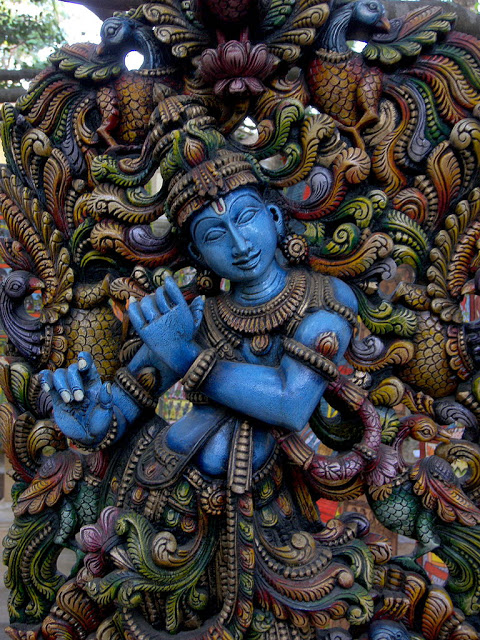
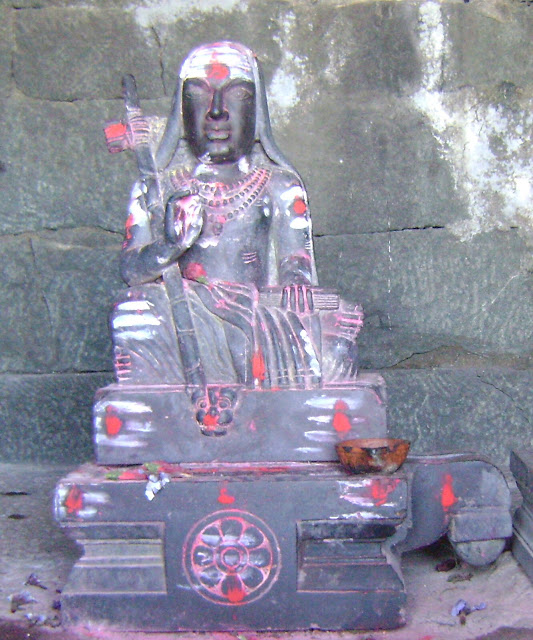
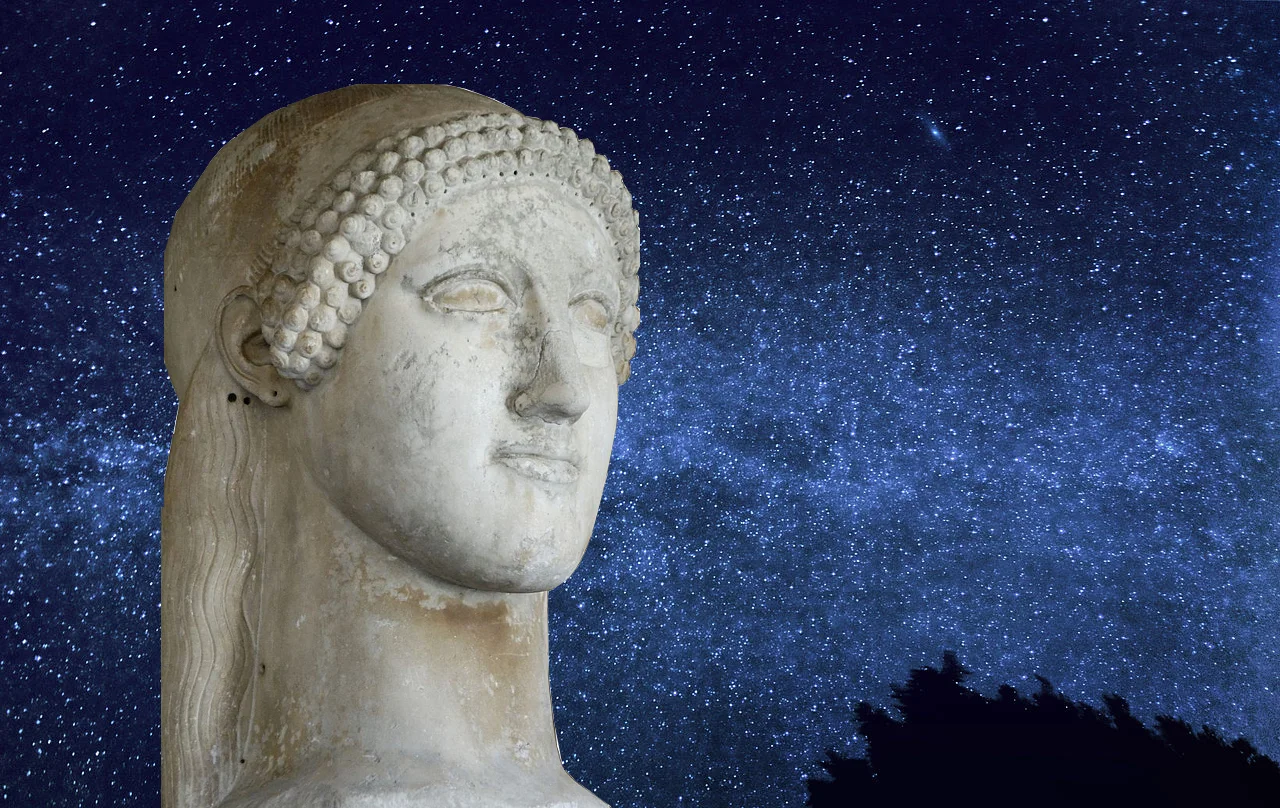
To evoke the same ineffable concept, Sri Iyengar quotes the Song of Sankaracharya, the Atma Shatkam or Song of the Soul (Sankaracharya, pictured above, is also known as Adi Shankara and his song is also known as Nirvanashatkam):

I cannot be heard nor cast into words, nor by smell nor sight ever caught [. . .]
I have no speech [. . .]
Neither knowable, knowledge, nor knower am I, formless is my form,
I dwell within the senses but they are not my home;
Ever serenely balanced, I am neither free nor bound --
Consciousness and joy am I, and Bliss is where I am found. 53.

image: Wikimedia commons (link).

Note that in the image above showing a shrine to Adi Shankara, the statue of Shankaracharya in its alcove is flanked on either side by twin female deities, each of whom is carrying a torch in her inside hand, pointed downwards.* This quite clearly links to the concepts discussed in the previous post entitled Isis and Nephthys: March Equinox 2015, as well as to equinox-and-torch symbology discussed here.

Thus Adi Shankara and his message can be clearly linked to the central "Djed-column raised up"

which is also depicted in between the equinoxes (and which is associated with the vertical column connecting winter and summer solstices), and all that it represents.

* Later note: Special additional thanks to correspondent Ramakrishnan T., who points out that these figures are known as Dwarapalakas, are found throughout India, are almost exclusively male, and are carrying a mace and not a torch! However, what is very interesting to me is that, while he is certainly correct, these figures do sometimes appear to have characteristics that are slightly androgynous, but even more interesting is that they often have their legs crossed in a very distinctive manner reminiscent of the equinoctial figures (who are also male) discussed in the link included in the above paragraph at the word here.

And, there is also no doubt that the mace seen in the Dwarapalaka symbology is similar in form to the torch found in the symbology further west, raising interesting questions about possible common origin or cultural diffusion on this particular symbol.

Thank you to Dr. Darrah Westrup and Jason Wachob for sharing their helpful discussion of this extremely important subject!

Video: "The Blessing Mother, The Cursing Mother, The Dream, and The King"

Video: "The Blessing Mother, The Cursing Mother, The Dream, and The King"

I have just made a new video for you:

"The Blessing Mother, The Cursing Mother, The Dream, and The King."

From the description I posted with the video:

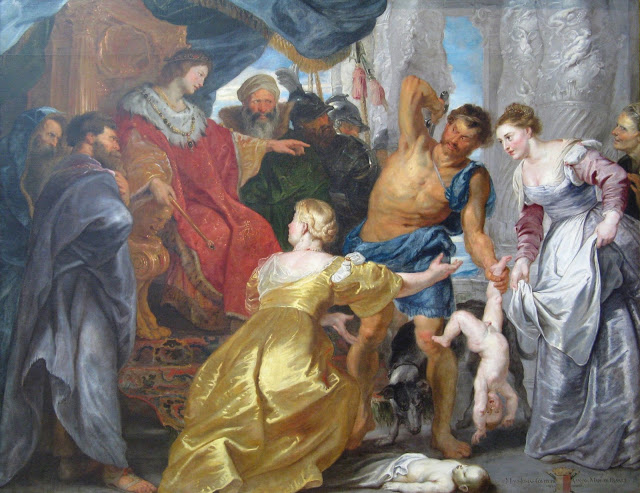
How the stories in the Bible are based on the motions of specific stars and constellations, this time examining the Judgment of Solomon.

And how you (yes, you) are the star of the story of the Judgment of Solomon (and all the other myths, sacred stories and ancient scriptures).

Although many of those who take these stories literally are motivated by the beauty and power of the sacred texts and stories that make up part of the precious inheritance of the human race, if these scriptures and sacred stories were not intended to depict literal events and were never intended to be taken literally, then it stands to reason that literalism (trying to take them literally when they are not designed to be understood that way) could lead to very serious errors in understanding their intended message.

If the scriptures are not intended to be understood literally, then literalism can in fact cause their actual intended message to be completely inverted! They can end up being used to teach a message that is "180-degrees out" from what they were originally intended to convey.

This video provides evidence that the myths, sacred stories and scriptures of humanity were not intended to be taken literally, and they do not depict literal, historical, earthly events. 

The scripture passage explored in this video involves the famous Judgment of Solomon, from the Hebrew Scriptures, and the book known today as the First Book of the Kings. 

Taking the world's myths, sacred stories and scriptures literally, will (almost by definition) lead one to think that they are about external actors and events: that they are about other people who lived thousands of years ago. 

But if the stories are not in fact about external, historical, earthly persons who lived thousands of years ago, then they must be about something else.

This video argues that they are about YOU: about each and every human soul. The events in the Judgment of Solomon are there to teach us about something incredibly important about ourselves, about the invisible and unseen world that is actually the true source of life and blessing, and about the fact that we have access to that invisible world of spirit at all times: that in fact, it is NOT external to us at all . . .

image: Wikimedia commons (link).

Pentecost, Gemini and the Scales of Judgement

Pentecost, Gemini and the Scales of Judgement

image: Wikimedia commons (link).

Welcome to all new babies born today! Those born at this time of year are born in the sign of Gemini, which is generally understood to stretch from May 21 through June 20.

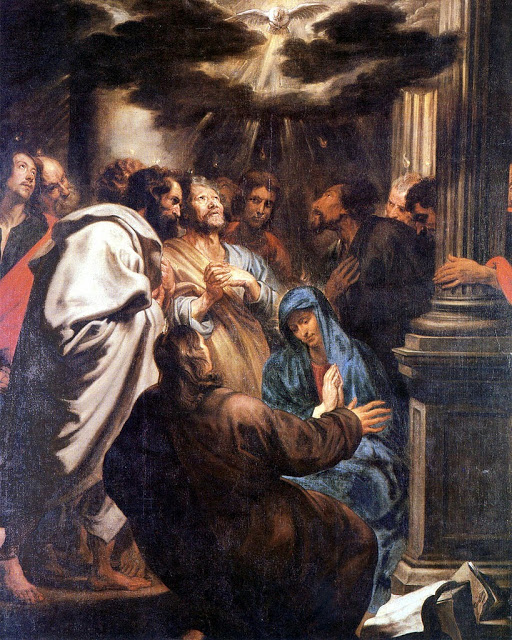
This time of year is also associated with the Pentecost story described in the New Testament of the Bible: we are going to see that there is a powerful connection between the events of the Pentecost story and the zodiac sign of Gemini. In order to understand this connection, we have to first explore and understand a few aspects of Gemini: the constellation of Gemini (the Twins), its position on the zodiac wheel of the solar year, and some of the ancient mythological connections surrounding the Twins of Gemini.

Some of what follows has to do with "celestial mechanics," but don't be put off by that, even if it is a little unfamiliar to you. It is not that difficult to understand, with a little help (this video may be helpful as an overview). Additionally, it just so happens that right now the stars of Gemini are part of a beautiful display in the western sky, immediately following the setting of the sun behind the western horizon . . .

Because of the "delay" in the background of stars caused by the phenomenon known as the precession of the equinoxes, the sun is actually in the constellation of Taurus presently, with Gemini "behind" Taurus in terms of east-to-west progression across the sky. Gemini has been "delayed" and thus the sun is not "in" Gemini yet: the sun would be in Gemini at this time of year during the Age of Aries, and we are now approaching the end of the Age of Pisces and the beginning of the Age of Aquarius. However, there are good reasons for continuing to understand the signs according to the Age of Aries, and for these reasons if you were born from May 21 through June 20 you are considered to have been born in the sign of Gemini (for more on the "mechanics" of the constellations moving through the sky, and the "delay" caused by precession, see also this video).

If you consult astrological descriptions of the sign of Gemini, you will find that it is considered the third sign of the zodiac (after Aries and Taurus, which shows that the Age of Aries system is still in use, because even to this day Aries is considered the first sign of the zodiac, Taurus the second, and Gemini the third). You will also find that most astrological descriptions of this sign will tell you that one of the traits of Gemini has to do with skill in speech and persuasion. The signs of the zodiac are also associated with parts of the body, and the sign of Gemini is associated with the two lungs, as well as the two arms, and this association with the two lungs logically connects to the association of Gemini as being skilled in speech (it is also a Mercury sign, and Mercury is a god associated with persuasive speech as well, being the messenger of the gods).

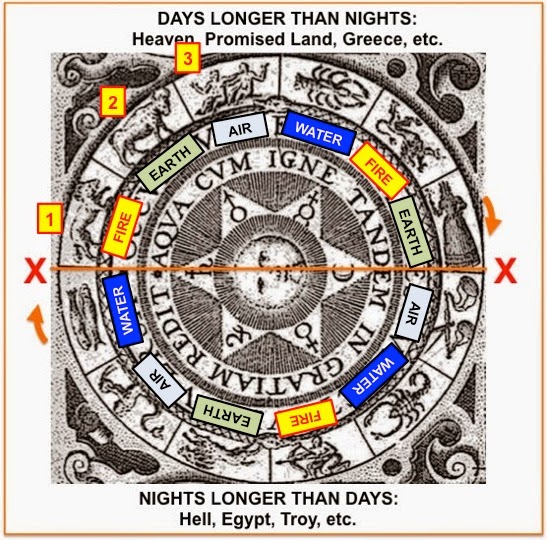
Gemini is also what is known as an "Air" sign. The signs of the zodiac are traditionally ascribed to one of the "four elements" of Fire, Earth, Air, and Water (Alvin Boyd Kuhn's Lost Light has at least one chapter dealing with the spiritual significance of each of these Four Elements, and he puts forth the argument that this division was more spiritual in nature than it was scientific). Because there are twelve zodiac signs, the division of the zodiac into these Four Elements means that three signs will be associated with each element. That association, as well as the numbering of Gemini as the third sign of the zodiac, is shown in the diagram below:

So, to summarize what we have learned so far, Gemini is an "Air" sign, Gemini is associated with speech, and Gemini is the third sign in the progression of the zodiac wheel (starting with Aries). Gemini is associated with the period between May 21 and June 20, as the sun enters one of the twelve "houses" of the zodiac in succession throughout the year, approximately one month per sign.

We can also note that Gemini is one of the "uppermost" signs of the year, as it is located immediately prior to the June solstice (summer solstice for the northern hemisphere). The point of June solstice (which falls right around June 20 or June 21 each year, depending on calendar "slippage" which the leap-year days are designed to correct) falls at the juncture between Gemini and Cancer. So Gemini is the sign that marks the approach of the summer solstice.

It is also noteworthy that the Twins of Gemini in traditional representation are often depicted as "seated" in their posture, just as they are in the diagram above from AD 1618. The constellation itself does not really make the Twins look "seated," at least the way it is outlined by H.A. Rey in his indispensable guide to the constellations, but that is the way the sign was often traditionally represented. You can see numerous posts that explain how to find Gemini in the handy "index" of previous mentions found here.

The planetarium image below shows the constellation Gemini with the sun in the constellation Taurus, just "ahead" of Gemini on the east-to-west progression (this image is taken as if facing to the south, with east thus on the left and west on the right, such that constellations will move across the sky from left-to-right as we look at this image, due to the earth's rotation towards the east):

Obviously, you won't be able to see the stars like this when the sun is up in the heavens as it is in this image, but there is a reason for this image showing Gemini at zenith which we will get to shortly. However, as the earth continues to turn and the sun dips below the western horizon (to the right of the image) then you can imagine that Gemini will still be above the western horizon just after sunset, and the two bright stars of Gemini will be seen in the west hanging above the horizon, just as they in fact are right now.

In fact, if you look to the west after sunset, you can see a dazzling lineup of stars and planets and the moon. Venus is just below the two stars Castor and Pollux, the "heads" of the twins in the constellation Gemini (see inside the blue rectangle in the center of the image above). Above them (at an angle) will be Jupiter, and then the moon, all of them heading towards the western horizon in that order. You can see a good discussion and some diagrams of that sunset lineup in Sky & Telescope's weekly discussion notes here.

Again, the point is that the sun is not exactly in the constellation of Gemini right now -- precession has "delayed" Gemini in the heavens over the course of thousands of years -- but Gemini is close behind the sun, and if we were living back in the Age of Aries about 2,200 years ago, the sun would already be "in" the constellation of Gemini at this time of year (that is to say, from our position on the earth, looking towards the sun would be looking towards the "wall" of the dining room where the picture of Gemini is located, in the analogy of the earth going around the sun inside of a dining room, a helpful analogy that I explain here). 

All of this background is a prelude to the examination of the celestial foundations for an important episode described in the New Testament of the Bible -- the Pentecost, found in Acts chapter 2. Pentecost Sunday is celebrated by churches even to this day on the Sunday falling seven weeks after Easter Sunday. Seven weeks is of course forty-nine days, and the word "Pentecost" itself means "the fiftieth," meaning that it falls fifty days after the celebration of the Resurrection -- counting the day of Resurrection as the first of the fifty will end up with seven weeks later.

This New Testament event is closely connected and parallels an Old Testament event celebrated seven weeks after the Passover: the Feast of Weeks (or Shavuot). The Feast of Weeks celebrates the giving of the Law upon Mount Sinai, traditionally taking place seven weeks after the Passover and the episode of the Exodus from Egypt and crossing of the Red Sea (for more on the Red Sea and its zodiacal connections, see this previous post).

Because of the way the date of Easter is calculated, Pentecost will fall between May 10 and June 13 using the Western church reckoning of Easter, and between May 23 and June 26 using the Eastern church reckoning of Easter. In other words, it will usually fall within the sign of Gemini.

Here is a portion of the New Testament account of the episode celebrated at Pentecost, from the book of Acts of the Apostles, chapter two:

1 And when the day of Pentecost was fully come, they were all with one accord in one place.
2 And suddenly there came a sound from heaven as of a rushing mighty wind, and it filled all the house where they were sitting.
3 And there appeared unto them cloven tongues like as of fire, and it sat upon each of them.
4 And they were all filled with the Holy Ghost, and began to speak with other tongues, as the Spirit gave them utterance.
5 And there were dwelling at Jerusalem Jews, devout men, out of every nation under heaven.
6 Now when this was noised abroad, the multitude came together, and were confounded, because that every man heard them speak in his own language.
7 And they were all amazed and marveled, saying one to another, Behold, are not all these which speak Galileans?
8 And how hear we every man in our own tongue, wherein we were born?
9 Parthians, and Medes, and Elamites, and the dwellers in Mesopotamia, and in Judaea, and Cappadocia, in Pontus, and Asia,
10 Phrygia, and Pamphylia, in Egypt, and in the parts of Libya around Cyrene, and strangers of Rome, Jews and proselytes,
11 Cretes and Arabians, we do hear them speak in our tongues the wonderful works of God.
12 And they were all amazed, and were in doubt, saying one to another, What meaneth this?
13 Others mocking said, These men are full of new wine.
14 But Peter, standing up with the eleven, lifted up his voice and said unto them, Ye men of Judaea, and all ye that dwell at Jerusalem, be this known unto you, and hearken to my words:
15 For these are not drunken, as ye suppose, seeing it is but the third hour of the day.

Now, having examined the characteristics of the zodiacal sign of Gemini, in which this "fiftieth-day" event takes place, several specific details in the above passage should fairly jump out at the reader:

  • There is a sound of rushing mighty wind (Gemini is an Air sign).
  • The sound filled the house where they were sitting (the sign of Gemini is one of the twelve houses of the zodiac, and the Twins are traditionally depicted as sitting).
  • The effect of the miraculous wind is the ability to speak with other tongues (Gemini is associated with Mercury, the messenger of the gods, with the lungs and with speech).
  • When some mocked this miraculous ability, and said they were full of "new wine," Peter stands up and his speaking ability is emphasized in the text, which says that he "lifted up his voice," and then declared, "be this known unto you, and hearken to my words" (Gemini is associated with Mercury, the messenger of the gods, with the lungs and with speech -- same as the previous point).
  • Peter then declares that these who are declaiming in various tongues are not drunk, as some suppose, and could not be, "seeing it is but the third hour of the day" (Gemini is the third sign of the zodiac).

The abundance of clues that we are dealing with a "Gemini event" is truly compelling, especially in conjunction with the fact that Pentecost falls within the sign of Gemini.

Added to these clues from the second chapter of Acts is the traditional understanding that the above events took place while Peter and the other disciples were gathered in the Upper Room, most likely in celebration of the Shavuot or Feast of Weeks. In the first chapter of Acts, in the thirteenth verse, the text itself tells us that the disciples "went into an upper room" and there abode in prayer and supplication awaiting the power of the Holy Ghost that was promised in Acts 1:8.

As has been pointed out already, and as can be seen in the zodiac diagram above, Gemini is an "upper room" constellation (for more discussion of the Upper Room, in conjunction with the events of the Triumphal Entry into Jerusalem described in the four gospel narratives, see this previous post). Gemini is located at the "top of the zodiac wheel," immediately prior to the point of summer solstice, which itself is the very summit of the year, and the highest arc that the sun will make across the sky before beginning its "downward journey" towards winter solstice again.

Some astute readers may be wondering at this point about the famous "cloven tongues like fire" which come down and sit above each of those gathered after the sound of a mighty rushing wind which filled the room where they were sitting. The mighty rushing wind can be confidently connected with the fact that Gemini is an Air sign -- but how can we reconcile the fact that Gemini is an Air sign with the image of tongues of flame coming down in conjunction with the wind and stationing themselves over the heads of each of them, as the text says in verse three? 

The presence of fire would seem to confuse all the previous arguments based on Gemini as an Air sign.

However, the fact that tongues of flame come down and sit on or over each of them, far from being a problem for this argument, turns out to be one of the most conclusive details in this story pointing to the identification with Gemini.

The most prominent aspect of the constellation Gemini in the heavens, of course, is the fact that the two stars marking the heads of the two Twins are very bright stars: you can verify this for yourself by going out tonight just after sunset, where the two bright stars of Castor and Pollux are clearly visible even in the fading glow of the sun and the waxing brightness of the moon. Indeed, the heads of the Twins are so bright in relation to the other stars in the constellation that the Twins themselves are associated with fire -- see for instance the depiction of the Twins as carrying torches in the Roman sculpture below (and see also previous discussions about the Twins as "fire sticks" in myths and sacred traditions literally around the world):

image: Wikimedia commons (link).

It turns out that the episode of a mighty rushing wind and heavenly fire descending to rest above the heads of "each of them" has a history in mythology that precedes the traditional dating of the New Testament cycle of stories -- and that it is in fact explicitly associated with the Twins of Gemini, the mythological heroes named Castor and Pollux (or Polydeuces).

These two mythical Twins were the sons of Zeus by a mortal mother, and traditionally one of them was immortal and the other was mortal. Because they were the sons of the god Zeus, they were also referred to as the Dioscuri (sometimes spelled "Dioscori," although this is not as common today), which means "sons of god" or "sons of Zeus."

Some of the ancient mysteries are thought to have been devoted to the Dioscuri, including the mysteries of Samothrace; the ancient mysteries are very important -- one of the most important of the mysteries of the ancient world took place at Eleusis and is discussed here -- and their significance is discussed in my book The Undying Stars (including some discussion of the mysteries at Samothrace).

In Book IV of the very important multi-volume history written by Diodorus Siculus (who lived and wrote during the first century BC), of which just under half has survived to this day (perhaps the other texts will be discovered someday), Diodorus relates an episode from the voyage of Jason and the Argonauts (who were pursuing the Golden Fleece, a goal that is clearly connected to the sign of Aries the Ram). See if you can spot some elements in this account, which historians believe was published sometime between 60 BC and 30 BC (but which relates mythological details which were certainly much older), that remind you of elements in the Pentecost story:

As for Heracles, after he had been splendidly honoured with gifts and the appropriate tokens of hospitality, he left Hesione and the mares in keeping with Laomedon, having arranged that after he had returned from Cochis, he should receive them again; he then set sail with all haste in the company of the Argonauts to accomplish the labour which lay before them. 
But there came on a great storm and the chieftains had given up hope of being saved, when Orpheus, they say, who was the only one on shipboard who had ever been initiated in the mysteries of the deities of Samothrace, offered to these deities the prayers for their salvation. And immediately the wind died down and two stars fell over the heads of the Dioscori, and the whole company was amazed at the marvel which had taken place and concluded that they had been rescued from their perils by an act of Providence of the gods. For this reason, the story of this reversal of fortune for the Argonauts has been handed down to succeeding generations, and sailors when caught in storms always direct their prayers to the deities of Samothrace and attribute the appearance of the two stars to the epiphany of the Dioscori. [From Book IV, end of chapter 42 through beginning of chapter 43,  translation of C. H. Oldfather, 1933: available online here].

The parallels between the above account from the mythical journey of the Argonauts and the events in the second chapter of Acts are striking: there is a "great storm" which is characterized primarily by wind, because after Orpheus offers prayers to the deities of Samothrace (which deities the text makes clear are the Dioscuri themselves) we read that "immediately the wind died down."

Then, we read that "two stars" fell over the heads of the Dioscuri (Castor and Pollux were members of the heroic crew of Jason's ship, the Argo -- a detail that is a little strange, since Orpheus is praying to them, when it seems they should be able to just stop the storm directly, but remember that this is a myth, and these sorts of seemingly contradictory details actually reveal that this myth is in fact very ancient and that even at the late date that Diodorus Siculus was writing, in 60 BC to 30 BC, the myth already involved layers of mythical tradition that had come down through the centuries, to the point that it was already "hoary," or covered in cobwebs and dust).

Finally, we read that "the whole company was amazed" and they went about telling this story everywhere, and handing it down to succeeding generations.

These parallels should absolutely cement the identification of the account in Acts 2 with the zodiacal  house of Gemini, especially when considered in conjunction with the abundance of clues that we have already examined above.

To put it as plainly as possible: the descent of tongues of heavenly fire which came down and rested upon the company in the upper room in Acts 2 is an image anciently associated with Castor and Pollux, the Twins of Gemini, and known to have been described in literature written prior to what is considered to be the time of the New Testament.

Many other important elements of the Acts 2 account, including the powerful wind, are also associated with the Twins of Gemini and can be shown to have been associated with the Twins prior to the appearance of the Acts account.

And yet there is actually even more evidence which supports this interpretation of the Pentecost story, and of the associated Old Testament commemoration of the Feast of Weeks which corresponds to the Pentecost story (and which most interpreters say that the disciples and the visitors to Jerusalem from other lands who are described in the Pentecost account in Acts 2 were there to celebrate -- that is, they were celebrating Shavuot or the Feast of Weeks when Pentecost took place, which is why there were so many visitors from other lands in Jerusalem who could be amazed at the speech of the disciples and who all heard the messages in their own native language or mother tongue).

The Feast of Weeks, as mentioned previously, celebrates the giving of the law

on Mount Sinai, after the crossing of the Red Sea. The previous post discussing the episode of the crossing of the Red Sea gave evidence that this event refers to the crossing of the equinox point at spring equinox, in which the sun (or the earth on its annual orbit, depending on the point of view we wish to use) crosses up out of the lower half of the year and into the upper half of the year (when days become longer than nights again, and continue lengthening on their way to the very summit of the year at summer solstice).

We can see that "going up a high mountain" after crossing into the upper half of the year at equinox corresponds rather nicely to the going up onto Mount Sinai after crossing the Red Sea out of the house of bondage in the lower half of the year. But what about the giving of the law?

The Reverend Robert Taylor (1784 - 1844), whose interpretation of the Pentecost event informs all of the arguments outlined in this blog post so far, gives a very good explanation of why the sign of Gemini is associated with the giving of the law, and the balanced scales of justice. He explains that when the Twins of Gemini are at their zenith point on their arcing path across the sky (as they are in the planetarium screenshot presented above, in which I have outlined the constellation of Gemini with a light-blue rectangle), the two equinoctial guardians of Virgo and Pisces are rising in the east and setting in the west, creating an image of balance and harmony.

You can see that this is the case from the image above: Virgo is rising along the eastern horizon (left side of the image, because we are "facing to the south"), and Pisces is setting towards the western horizon. The head of Virgo and her distinctive "outstretched arm" (marked by the star Vindemiatrix) are above the horizon. Most of Pisces is visible -- only the lower of the two fishes has disappeared under the western horizon, but the "fish-band" that holds the two fishes together, and the other fish, are clearly visible above the horizon.

To understand why these two signs are associated with the equinoxes and with the scales of justice, please go back and read through the arguments and evidence presented in previous posts "Isis and Nephthys: March equinox 2015" and "The horizon and the scales of judgement."

Thus, when Gemini is high in the sky (at its highest point), it basically creates an image of the scales of justice, equally balanced -- with Virgo the sign just prior to the fall equinox on one side, and Pisces  the sign just prior to the spring equinox on the other (during the Age of Aries, the sign of Aries was the first sign after the spring equinox: Pisces was the last sign before it).

And, there are ancient sources which attest to the fact that the Twins of Gemini were associated with the concept of justice. For instance, in the quotations about the Twins collected on this page, we see that in the Nemean Ode of Pindar (an ancient Greek poet who lived from 522 BC to 443 BC), in the second sentence cited on that page, it is said of these two divine twins: "And due regard have they for men of justice" (Nemean Ode 10: 3 -5; italics added here to make the connection).

Again, in fragment 6 of Book VI of the history of Diodorus (also quoted on the page linked in the preceding paragraph) we find the Twins described as follows: "And, speaking generally, their manly spirits and skill as generals, and their justice and piety as well, have won them fame among practically all men, since they make their appearance as helpers of those who fall into unexpected perils" (and at this point, the editor of that page explains, "that is, they appear to mariners in storms"). In the preceding quotation, I have added italics to the word "justice," to make it clear that ancient authors associated the Dioscuri with justice.

Thus, the episode of the giving of the law upon the high mountain of Mt. Sinai, which is also associated in the New Testament with the feast of Pentecost and the descent of holy fire over the heads after the visitation of a divine wind, can be seen to contain details or symbology which connects to the zodiac sign of Gemini, the Twins.

In fact, there are so many points of correspondence here that the association is practically undeniable. And, the fact is that the same kinds of celestial correspondence can be demonstrated over and over again all throughout the stories in the Old and New Testaments of the Bible -- as well as throughout  the myths and sacred stories found in virtually every part of the globe in every culture (see for example some that have been discussed previously, listed in this "Star Myth index").

Now, to those who have been told that the stories of the Bible are meant to be understood literally, as events which happened on earth to historical figures, and who have believed that this is how they are supposed to be understood and for whom such an understanding is an important part of their personal identity and life (and I used to be one who understood them in just such a way, and for whom such a literal interpretation was an important part of my personal life and identity), the discovery of overwhelming amounts of evidence which shows that these stories are in fact clear celestial metaphor rather than literal history can be quite a shock, to say the least.

Such a discovery can lead one to feel as if the entire meaning of the stories has been lost.

However, after long and careful consideration of this very question, I believe that this discovery actually enables us to understand their intended meaning -- while trying to force a literal reading onto scriptures that were never intended to be understood literally will almost certainly force us to misunderstand their meaning, perhaps quite egregiously.

I believe that their true meaning is far more profound than simply "stories that embody the motions of the heavens." In fact, although one might conclude from the foregoing explication that these stories are actually all about the constellations, the zodiac, and the motions sun's progress through the background zodiac stars in the annual cycle of the year, I would argue that in spite of all that has been demonstrated above, in one sense the true meaning of the stories has little or nothing to do with the stars at all!

That's because I believe that in these stories, the entire celestial realm and all the actors in the heavens above (sun, moon, planets, and stars) are themselves metaphors or allegorical pointers towards the spiritual truths that the myths of the world are all trying to convey, using the heavenly actors to convey invisible concepts that are very difficult to grasp directly and must be explained through poetry, comparison, allegory, and myth.

In other words, as many previous posts have explained, these stories are not actually about disciples who were gathered in an upper room, nor semi-divine heroes who were sailing on the ship Argo in the quest for the Golden Fleece, nor even about the glorious sun passing through the glittering constellation of Gemini on its way to the summer solstice at the top of the year. These stories are about the human soul, the condition of the human soul in a physical body, and the condition of the human soul in a universe that is simultaneously physical and spiritual at the same time (a universe which has an invisible component which is not so easy to grasp but which is extremely real, nonetheless, and which is even more important in many ways than the physical and material side of the universe that we more easily see and experience every day).

In other words, in an important sense, these stories are all about YOU.

(For more discussion of that critical assertion, see previous posts such as this one,

this one, and this one).

The story of Pentecost has many important and profound messages which can be incorporated into our everyday life, far more than can be elucidated here, and so just a few will quickly be touched upon, although each could be the subject of much more elaborate investigation and consideration.

For one thing, it shows the connection between the visible and the invisible world -- the immediate presence of the divine or the infinite, which rests upon each person, and which is dramatically depicted in the story of the events in the upper room. Previous posts which have dealt with this subject include "The peace of utter stillness," "Epiphany: revealing the hidden divine nature," and "Amen and Amenta."

Connected to this theme, which is vast in its import, is the related concept of ecstasy, which can be argued to be absolutely central to almost every ancient sacred tradition around the world -- including the scriptures that made their way into what we call "the Bible," as I have argued in previous posts such as "The Bible is essentially shamanic," "The centrality of ecstasy, according to ancient wisdom," "The shamanic foundation of the world's ancient wisdom," and "Whether in the body or out of the body, I cannot tell: Paul the Gnostic opponent of Literalism" (among many, many others).

Certainly the "Pentecostal" event has been associated with the idea of ecstasy and the ecstatic in some interpretations of its significance, although to greater and lesser degrees which have varied widely among different approaches to these texts.

Finally, the above discussion and the clear connections to the concept of law, judgement, and the "celestial scales between the two horizons" shows that while we transit between the "two horizons" in this incarnate existence, we are indeed passing through the scales of judgement, or what the ancient Egyptians called the Hall of Two Truths: the Hall of Judgement. Our actions in this world are in some way profoundly important to the condition of our soul, and they are in a very real sense being "weighed in the balance."

One of the most urgent themes of the Hall of Two Truths scene in the Egyptian Book of the Dead is the admonition to not tell lies, and the "negative confession" by the subject of the weighing that he or she has not told untruth during this life. Taking these scriptures and teaching that they mean something that is virtually the opposite of what they were intended to mean would thus appear to be a grave mistake indeed.

Ultimately, these passages have a very uplifting message about the dignity and indeed divinity of each and every human being, man, woman, or newborn child, and about our connection to the infinite, even as we pass through this incarnate realm of material existence. For although incarnation was allegorized as the "lower half" of the zodiac wheel (between incarnation at the fall equinox and re-ascent to the spirit world at the spring equinox), even so we are connected to the very top, the "upper room," and the world of spirit which is always present, even if not always visible.

-----

Warmest welcome to AJK!!!

Also, special thanks to reader and correspondent Pat B. for sending his own thoughts and analysis on Pentecost and the stars!

Two Visions

Two Visions

image: Wikimedia commons (link).

In Peter Kingsley's remarkable book entitled In the Dark Places of Wisdom, he describes the general condition of "the hollowness we feel inside" and for which "the world fills us with substitute after substitute and tries to convince us that nothing is missing" (33 - 34).

"But nothing has the power to fill the hollowness," he says.

Even religion and spirituality and humanity's higher aspirations become wonderful substitutes. And that's what happened to philosophy. What used to be ways to freedom for our ancestors become prisons and cages for us. We create schemes and structures, and climb up and down inside them. But these are just monkey tricks and parlour games to console us and distract us from the longing in our hearts. 35.

Dr. Kingsley states directly that this problem introduces a very negative aspect into the very heart of Western culture specifically. He says:

Western culture is a past master at the art of substitution. It offers and never delivers because it can't. It has lost the power even to know what needs to be delivered. 35.

And yet, In the Dark Places of Wisdom explores evidence that at least some of the ancients -- even in what was later to become "the West" -- knew what needed to be delivered, and what's more they knew exactly how to deliver it (or, perhaps more precisely, they knew "how it is delivered").

The paradox is that what we are looking for in all of the external substitutes and external systems cannot be found in that endless train of substitutes -- but that we actually "already have everything we need to know, in the darkness inside ourselves" (67). The ancient wisdom keepers, including the pre-Socratic philosopher Parmenides, Dr. Kingsley asserts, understood that the answer was "all a matter of finding their own link to the divine," and that the link was within us all along (64). It was "just" a matter of going within and turning ourselves "inside out until we find the sun and the moon and the stars inside" (67).

I believe that this profound message is very much at the heart of what the ancient knowledge in all its different manifestations was trying to convey to us, or to help us to discover. It is expressed in metaphor after metaphor -- the one I have used as a kind of "shorthand" for all of them is the concept of the "raising of the Djed," but it is also found in many other forms, such as the contrast between the good red road in the vision of Black Elk and the fearful black road of troubles.

It refers to the re-discovery of the divine within, an awakening to the fact that we are actually already connected to the entire universe outside, and the practice of going into the darkness and stillness of the invisible world and awakening to our connection to it on a regular basis -- "to find out," Peter Kingsley says, "how you're related to the world of the divine, know how you belong, how you're at home there just as much as here. It was to become adopted, a child of the gods" (64).

A society that has somehow lost or destroyed or buried this knowledge can be expected to be characterized by the kind of desperate pursuit of "substitutes" that Peter Kingsley describes in the quotations cited above. 

But what a different attitude and approach to life is offered in the understanding that we already have the entire universe inside of us, that we are already inseparably connected to the invisible realm, described as "the realm of the gods," that in fact we are just as much "at home there" as we are in the material realm, the ordinary realm. That we are each somehow "a child of the gods" -- bearers of a divine nature lost and almost forgotten within our physical and animal nature.

What is taking shape in this discussion is a framework of two very different visions of the world, two very different "paths." They can be seen to be very closely related to the two "paths" or "visions" articulated in all the world's myths and sacred stories and scriptures which express this contrast using (among other things) the great cycles of the heavens, including the cycle of the year and the "cross" formed by the "horizontal line" between the equinoxes and the "vertical line" between the solstices, expressed in the mythology of ancient Egypt as the "Djed column cast down" and the "Djed column raised up" (for some background on this central concept, see this video and this video, and numerous previous posts such as "

Scarab, Ankh and Djed," or "O Christmas Tree, O Christmas Tree," or "The Djed Column every day: Yoga").

The "great cross of the year" is itself a metaphor for the crossing of the material and the spiritual, invisible, or divine which together express the dual nature of every human being -- as well as the dual nature of the world around us. To the extent that our vision is operating along the "horizontal" or material line, we can be expected to exhibit the frantic pursuit of external substitutes described in Dr. Kingsley's quotations above.

But if we can awaken to the truth that we are already connected to the invisible realm, the divine realm -- that we actually "belong" in the invisible realm just as much as in the material realm with which we are more familiar -- the entire paradigm shifts (to use a phrase that has been ruined by over-use, unfortunately, but which I choose to deliberately employ here to describe the situation, because it expresses the complete transformation of the entire framework or way of seeing). 

It should be evident that the first situation (frantic and endless substitution) would logically tend towards an attitude of scarcity, of always needing more (because desperately needing new substitutes when the old ones turn out to be as unfulfilling as all those that went before them).

It should be equally evident that the second situation, in which it is known that what we seek is already in our possession -- that in fact we contain the "entire universe inside," that we are in some way an "adopted child of the gods" -- points towards a vision of plenty (we don't have to worry that we won't get what we need, if it is already and always securely within ourselves, and impossible to be separated from ourselves). 

The second situation, it can be seen, also leads towards a sense of connection with all other beings, if we ourselves are always in deep connection with the invisible realm, if we ourselves already reflect and embody the entire universe, which they (all other living beings) are also inseparably connected to and which they also contain. 

But, if you are still in the mode of desperately cycling through "substitute after substitute" because you don't realize that you already have access to exactly what you seek, it might lead to profound division and competition and conflict between different men and women, and in fact it has.

I believe these two contrasting visions, and the attitudes of "plenty" versus "scarcity," and the understanding of "connectedness" versus "division and competition" can also be seen to be very close to the powerful message shared with the world by the Lakota holy man Black Elk and recorded in Black Elk Speaks, a message with tremendous importance for all people today.

Black Elk offers a very similar contrast between two approaches to life and the world, expressed in his vision of the two roads: the good red road which runs between the north and the south (which would correspond to the "vertical column" between the solstices on the great cross of the year, and to the Djed column "raised up") and the black road which runs between the east and the west, "a fearful road, a road of troubles" (corresponding to the "horizontal column" between the equinoxes on the great cross of the year, and to the Djed column "cast down"):

In his explanation of his vision recorded in Black Elk Speaks, Black Elk contrasts the very different way of walking found on the two roads: traveling the black road, the fearful road, the road of troubles, he saw "everybody for himself and with little rules of his own" (215), while along the good red road he sees a fleeting vision of "the circled villages of people and every living thing with roots or legs or wings, and all were happy" (22), along with symbols of life blossoming forth in the world and in the heart of the people.

These characteristics are important: the attitude of "everybody for himself" is contrasted with the attitude of harmony and cooperation, and they relate directly to the contrast between what a previous post labeled "Vision A" and "Vision B," in which people and all other living beings lived together "like relatives" and in plenty (Vision A) versus everyone making "little islands" that separate people from nature and from one another, and the islands are always becoming smaller and smaller as a "gnawing flood [. . .] dirty with lies and greed" seethes around them (8). 

Upon further thought, the terms "Vision A" and "Vision B" don't really convey these concepts very well. It might be better to call them the "spirit road" and the "fearful road," or some other terms. But, we can lay out some of the characteristics inherent to each of these two opposing visions in a table below, each of which could easily become the topic for much more discussion and examination in the future:

  • Unity and community, "circled villages" vs. "Little Islands" and "Everybody for himself"
  • Vision of plenty vs. Vision of scarcity
  • Attitude of confidence vs. Attitude of fear and resentment
  • Connection to nature and to other creatures vs. division from and hostility towards nature and other creatures, and a desire to subjugate them (all part of the same endless pursuit of something that can never be attained)
  • Awareness of the dignity in each man or womanvs. racism, endless categorizing and divisions of humanity into "my allies" and "everyone else"

And there are many more contrasts that could be added to the list above.

Some might object that the "spirit road" vision is nice, but not practical "here in the real world." This is a broad objection, but I would propose that it is at least possible that this objection basically stems from an attitude of fearfulness, rather than an attitude of confidence -- and from a vision of scarcity rather than a vision of plenty. The important ancient philosopher Plutarch addressed these kinds of arguments from his opponents, when he laid out his treatises against the eating of flesh.

Just think of the profound changes we might see in our lives if we were to suddenly realize, on a very deep level, that we already have access to that which we have spent so much of our lives chasing after. How it might change the way we speak, or drive in traffic, or go about our daily lives. And how it might change the way we think about some of the bigger issues that have impacts far beyond our daily lives. 

I believe this message is very central to the message contained in all the world's ancient wisdom, bequeathed as a precious inheritance to all humanity, in the esoteric Star Myths found in the scriptures and sacred stories of virtually every culture on earth.

They are telling us that the connection to the entire universe is already right inside of each one of us, all the time. And every culture has (at some point in time) possessed knowledge of some of the different techniques for accessing that connection, and entering the realm of the gods, a realm we belong to just as much as we belong to this one.

In places where that knowledge has been lost (or deliberately destroyed), it is imperative that we find it again, for our own sanity and health -- and for that of the rest of the world.

The good news is that the answer is still there, in the stars over our heads -- which means that it is also right inside of us.

If we know about this, we owe it to others to tell them about it, because the substitutes "never deliver."

image: Wikipedia (composite of images here and here).

Mukasa, the Guardian of the Lake

Mukasa, the Guardian of the Lake

The Ssese Islands, in Lake Victoria, indicated by the red arrow. Google Maps.

Among the Baganda people of eastern-central Africa, whose land in their own language is called Buganda but in the Swahili language is called Uganda, one of the central figures of the spirit world is Mukasa, the Guardian of the Lake.

Of this powerful entity we read in African Mythology by Geoffrey Parrinder (1967) that:

The greatest of the demi-gods of Buganda, Mukasa, was a great giver of oracles, a kindly deity who never asked for human sacrifice. Myths say that when Mukasa was a child he refused to eat ordinary food and disappeared from home, later being found on an island sitting under a large tree. A man who saw him there took him to a garden and lifted him onto a rock. People were afraid to take him into their houses, thinking he was a spirit, so they built a hut for him on the rock. They did not know what to give him to eat, for he refused all their food, but when they killed an ox he asked for its blood, liver and heart. Then people knew he was a god and consulted him in any trouble. Mukasa lived on the island for many years, married three wives, was cared for by priests, and at last disappeared as suddenly as he had come.
His temple was a conical reed hut, which was rebuilt at intervals on the express orders of the king. Originally it is said that Mukasa spoke his will directly to the priests, but later they used mediums who uttered his messages. The medium never entered the temple but had a special hut in front of it. When seeking to know the will of Mukasa she smoked some tobacco until the spirit came upon her, and then she announced in a shrill voice what was to be done. The medium was not allowed to marry, or walk about in the sight of men, or talk to any man but the priest, and once chosen held the office till death. 89-90.

This information is remarkable on several levels, and may immediately ring some bells for readers who have studied the previous two posts in which I presented arguments to support my theory that the details of the story of the Buddha underneath the bodhi tree, as well as the story of Jonah underneath the vine or "the gourd" or the palmcrist or the kikajon found in Jonah chapter 4, are based upon the celestial figure of Bootes the Herdsman sitting with his back to the glorious column of the Milky Way galaxy -- see "The Bodhi Tree" and "The sacred fig tree, continued: Jonah and the gourd."

The general details regarding Mukasa presented above are corroborated in other accounts of the Baganda.

This page from the webiste uganda.com, for example, discusses the understanding of a spirit world beyond this one, and Mukasa as one of the most important of the Lubaale or "Guardians" who dwell in the invisible realm. There, we see that the location of the oracle where the medium (or mandwa) obtained messages from Mukasa was located on Bubembe island, one of a chain of over eighty islands known as the Ssese Islands (after the tsetse flies which swarm there) in Lake Victoria. 

See the map above for the location of Lake Victoria -- which lake is known in the Luganda language of the Baganda as Nalubaale, or "Lake of the Lubaale" -- and the Ssese Island archipelago in that great lake. Nalubaale is the second-largest freshwater lake on earth, with a surface area of 26,600 miles, second only to Lake Superior in size measured by surface area (the subterranean freshwater lake of

Lake Vostok in Antarctica has a surface area of "only" 4,800 miles although it is so massive that it contains roughly 1,300 cubic miles of water, compared to Nalubaale's 660 cubic miles and Lake Superior's 2,900 cubic miles and

Lake Baikal's 5,700 cubic miles).

It is actually somewhat difficult to find a good detailed map labeling all the Ssese Islands and especially Bubembe island, the location of the oracle and primary temple of Mukasa, but I believe Bubembe is the island that I have indicated with an arrow in the map below, which "zooms in" on the Ssese archipelago from the map shown above:

The details regarding Mukasa given in the quotation above are further supported by accounts found in

The Baganda: An account of their native customs and beliefs, by John Roscoe (originally published in 1911). There, we learn more information regarding the mandwa and her entering into a state of trance or ecstasy in order to receive information from the spirit world:

When she was about to seek an interview with the god, or to become possessed, she dressed like one of the priests with two bark-cloths knotted over each shoulder, and eighteen small white goat-skins round her waist. She first smoked a pipe of tobacco until the god came upon her; she then commenced speaking in a shrill voice, and announced what was to be done. She sat over a sacred fire when giving the oracle, perspired very freely, and foamed at the mouth. After the oracle had been delivered, and the god had left her, she was very fatigued and lay prostrate for some time. While giving the oracle, she held a stick in her hand with which she struck the ground to emphasize her words. 297-298.

Again, these details are extremely significant and noteworthy. First, they provide yet another example of a concept that can be seen to be absolutely ubiquitous around the world -- the understanding of the the existence of a spirit world with which it is possible to communicate and to which it is possible to journey even during this life, and the importance of doing so in order to obtain information or effect change which impacts aspects of this material world, which is intimately connected to and in fact can be said to be "interpenetrated by" and even "projected from" the spirit world in a very real sense. We have examined the importance of this concept in numerous previous posts including:

and many more.

Second, they again demonstrate that the actual techniques with which human beings may enter into a state of ecstatic trance or contact with the invisible realm are incredibly diverse, a fact borne out by the encyclopedic research presented by Mircea Eliade in the landmark text Shamanism: Archaic techniques of ecstasy (first published in 1951), and discussed in the previous post entitled "

How many ways are there of contacting the hidden realm?"

But perhaps most importantly and most strikingly, the details provided above illustrate powerful and undeniable points of resonance with other sacred traditions from different cultures around the globe, and what is more these points of resonance can -- I argue -- be seen to be distinctly celestial in nature, relating very clearly to specific important constellations which are used in other cultures and other traditions to point the way to the importance of the realm of spirit within and around us, just as they do in the sacred traditions of the Baganda.

Let us examine some of those details more closely.

First, we see that Mukasa shares very clear points of correspondence with the story of the life of the Buddha: he seated himself under a tree, he refused ordinary food, he was against sacrifice (in the case of Mukasa, he was specifically against human sacrifice).

Further, the temple of Mukasa is described as a "conical reed hut," and the mandwa herself also dwelt in a special hut near the conical temple or shrine of Mukasa, although she did not enter it herself, even when she communed with the Lubaale  himself, but instead smoked a pipe of tobacco in her hut and sat over a fire, perspiring and even foaming at the mouth. John Roscoe shows an image of one of the conical shrines of the Baganda in his 1911 book, and it looks very much like the image shown below of one of the sacred tombs of the Baganda:

image: Wikimedia commons (link).

We also see in the accounts that the mandwa is always a woman, that she begins her contact with the god by sitting above a fire and smoking a pipe, but that at the end she falls down exhausted, and lies prostrate for some time.

All of these details have very powerful correspondences to the specific details of the constellation Bootes the Herdsman and the other surrounding constellations and celestial bodies near Bootes, which the previous posts on the Buddha and the bo tree and on Jonah and the gourd have argued to be the foundation of those sacred stories as well.

The clear celestial connection of the story of the Buddha, the story of Jonah, and the details of the powerful Mukasa of the Baganda is extremely significant, and extremely powerful evidence supporting the actual celestial connection of all of the world's ancient sacred wisdom.

Let's spell out those celestial correspondences (which will be illustrated in the planetarium image below):

  • The sitting figure of Mukasa on the rock, the Buddha under the bodhi tree, and Jonah under his gourd are all related to the constellation Bootes, who can clearly seen to be seated in the sky (and can also be envisioned to be kneeling). In fact, the figure of Bodhidharma who is known as Da Mo in China and who traditional legends describe as bringing Buddhism to China and kneeling in front of a stone wall for nine years without moving, and in some cases to have originated the martial arts as a way of strengthening the monks and giving them a physical-spiritual practice that would function as a kind of "moving meditation," can also be shown to be connected to Bootes, as I have demonstrated in previous posts such as this one.
  • The beautiful tree arching over their heads is the shining column of the Milky Way, which rises up behind the sitting or kneeling figure of Bootes in the heavens.
  • The "conical hut" (or the "booth" that Jonah makes under the gourd) is most likely the outline of the constellation Ophiucus.

The diagram below shows the major players in these Star Myths. The constellation Scorpio is also outlined, latching on to the base of the Milky Way, because Scorpio almost certainly plays the role of the worm who smites the vine that shelters Jonah, and causes it to wither away, much to Jonah's frustration and anger.

Note that in the diagram, the gigantic constellation of Hercules with his raised club is also outlined. This constellation plays a role in the legend of Da Mo (where, I argue, Hercules represents Shen Guang, the faithful follower and first disciple of Da Mo). Interestingly enough, the proximity of Hercules to the seated figure of Bootes provides an important confirmatory piece of evidence that this celestial interpretation is correct for the story of the Buddha as well. 

The image below, from the 2d century AD, shows the unmistakeable figure of Hercules (or Vajrapani) standing behind the seated figure of the Buddha underneath the bo tree, exactly as the constellation of Hercules can be seen to stand behind the seated figure of Bootes in the night sky. This confirms beyond a shadow of a doubt that the ancients knew the connection between the Buddha and the celestial figures of Hercules and Bootes:

image: Wikimedia commons (link).

What is perhaps most striking in the sacred Baganda tradition surrounding Mukasa is the way in which the mandwa herself enacts the postures of the celestial constellations when she makes contact with the spirit world: first she sits above the fire smoking a pipe, just as Bootes can be seen to be "smoking a pipe" in the outline shown above, and then she falls down prostrate just as the constellation Virgo (who is located directly below Bootes and whose outline is shown in the image below from the Jonah story) can be said to be "lying prostrate and exhausted" in the way the constellation is arranged in the sky:

Note also that the mandwa carries a stick with which she strikes the ground for emphasis while reciting the message from the spirit world during her trance. The constellation Virgo can be seen to have a distinctive "outstretched arm" (marked by the star Vindemiatrix), which in some legends from around the world becomes a stick (and in other world myths it is a sword, a bow, or another implement connected to the story in question). 

She is thus enacting, in the most direct way imaginable, the concept of "as above, so below," which conveys a number of deep teachings, one of them the fact that every single man and woman embodies within themselves, contains , and connects to the infinite universe itself: that we are each a microcosm which reflects and which in fact is not separate from the infinite macrocosmaround and above us.

It is also extremely noteworthy that the famous Pythia who sat in the tripod at the oracle at Delphi can also be shown to reflect the constellation Virgo, who herself is in a seated position and who is directly above a celestial serpent, the constellation Hydra (corresponding to the dead carcass of the Python who was supposedly entombed deep beneath the temple at Delphi). In other words, the priestess at Delphi also entered into a state of ecstasy and communion with the gods by actually imitating the constellation Virgo, and embodying the concept of "as above, so below" and the microcosm/macrocosm.

Thus, we see that the sacred traditions surrounding the benevolent deity Mukasa of central Africa share extremely close and significant correspondences with the sacred traditions at the heart of Buddhism, ancient Greece, the scrolls of the Hebrew Scriptures and specifically of the prophet Jonah, and the legend of Da Mo in China, and that they thus provide an extremely powerful and significant piece of additional evidence to support the thesis that the world's sacred myths, scriptures, and traditions all share a common celestial foundation.

This fact, if true (and I believe the evidence is overwhelming and nearly beyond dispute; dozens more examples are discussed in other posts and in my previous books, a partial but by no means exhaustive index of such discussions can be found here) is of incredible significance for world history, and for our lives today.

Some of the implications might be:

  • That the sacred myths, scriptures and traditions of the world are not literal but that they are sophisticated celestial metaphors and that they use the celestial realm to convey the reality of the invisible realm of spirit.
  • That we are not in fact separate from the realm of spirit, but that we are intimately connected to it at all times, and that it is also within us at all times (as above, so below: microcosm and macrocosm).
  • That if the various myths and sacred traditions teach that we are "descended" from figures in Star Myths, they are talking about our spiritual nature, and that such stories are not intended to be used to divide people on the basis of ancestry (or supposed ancestry) -- in fact, since they teach the existence and importance of the infinite spiritual nature inside each man and woman, this can be seen to supersede the far less important external distinctions which people have used to set men and women against each other based on external differences.
  • That we are all deeply connected to one another and in fact to all beings and even to the universe itself.
  • That on this basis, it is wrong to kill other beings, and especially that human sacrifice is profoundly wrong -- in fact, Mukasa's ordinance against human sacrifice can be seen as teaching that it is wrong to take the life of another man or woman, and that one cannot even use "religious devotion" as an excuse to harm another man or woman.
  • That the ancients clearly understood these sacred myths to be connected to the constellations over our heads, and that they consciously depicted this understanding in their art and in their ecstatic practices and techniques.
  • That this ancient understanding has been subverted, and that it has in fact been overturned or "stood on its head," such that for at least seventeen hundred years it has been taught that sacred traditions are only meaningful if taken literally.
  • That literalism tends to invert the original meaning of the myths themselves, including all of the points outlined above. 
  • Literalism tends towards creating divisions between different people and different groups based on supposed descent from figures in stories that were originally intended to be understood as celestial metaphor. 
  • Literalism has often been used to "excuse" (or, it should be said, only "supposedly excuse," since it does not in fact excuse) violence against other men and women.
  • Ultimately, all of these sacred traditions point us towards the importance of the spiritual realm, and especially the importance of the spiritual realm within ourselves and within everyone around us: the importance of recognizing and elevating and evoking the spiritual and the divine side of ourselves and of the cosmos, rather than demeaning and debasing and brutalizing and denying the spiritual and the divine in ourselves and in others and in the world around us.

And there are many other implications, in addition to those listed here.

Namaste.