In the late 1970s, the pioneering researcher, author, lecturer, guide and "rogue Egyptologist" John Anthony West published Serpent in the Sky: The High Wisdom of Ancient Egypt. There, he set forth a revolutionary proclamation: overwhelming evidence points to the conclusion that "Egypt did not 'develop' her civilization, but inherited it."
In the final chapter of that book, he set forth evidence that the weathering on the Sphinx indicates a date of original construction far older than the conventional dating for its construction or conception between 2500 BC and 2600 BC (conventional history dates the construction of the Sphinx to the reign of Khafra aka Chepren, c. 2570 BC).
John Anthony West attributes the germ of this revolutionary idea to a comment included in a book published in the early 1960s in France (and not yet published in English when Serpent in the Sky was first written) by R. A. Schwaller de Lubicz, entitled Sacred Science: the King of Pharaonic Theocracy (published in France in 1961 as Le Roi de la theocratie Pharaonique, first published in English in 1982).
There, on page 96, Schwaller writes:
A great civilization must have preceded the vast movements of water that passed over Egypt, which leads us to assume that the Sphinx already existed, sculptured in the rock of the west cliff at Gizeh, that Sphinx whose leonine body, except for the head, shows indisputable signs of aquatic erosion.
At this point, Schwaller includes a footnote, where he continues:
It is maintained that this erosion was wrought by desert sands, but the entire body of the Sphinx is protected from all desert winds coming from the West, the only winds that could effect erosion. Only the head protrudes from this hollow, and it shows no signs of erosion. [footnote 28 on page 96].
Schwaller then goes on to cite some ancient sources saying that the Sphinx was actually buried in the sand even in ancient times, and that pharaohs (specifically Thothmes IV, an 18th dynasty king who reigned until his death which may have been in 1391 BC, and who is thought to have been the father of Amenhotep III, the father of Akhenaten, thus making Thothmes or Thutmose IV the grandfather of Akhenaten) were visited in dreams and advised to clear away this sand buildup, a task that Schwaller suggests probably took place more than once over the centuries during dynastic Egypt.
All of this, John West perceived, meant that the Sphinx must be much older than 2500 or 2600 BC (to have sustained such weathering, despite spending long centuries buried up to the neck in sand -- and, what is more, to have sustained weathering that strongly suggests watererosion rather than wind erosion).
John Anthony West's realization of the significance of this remark by Schwaller de Lubicz was absolutely essential to the research which was to follow, regarding the evidence pointing to the existence of advanced ancient civilizations centuries or even millennia before dynastic Egypt.
Equally significant was the move that John West made next, after publishing the first edition of Serpent in the Sky: he contacted a friend who was an English professor at Boston University, to see if that professor knew any geology professors who might be interested in looking at the evidence in order to help corroborate this revolutionary hypothesis.
Fortunately for those who value the quest to uncover the true story of our planet's past and humanity's ancient history, that English professor decided put geologist Dr. Robert Schoch in touch with John Anthony West -- a Yale-trained professor who was open-minded enough to travel to Egypt to see the Sphinx for himself in 1990 . . . and the rest is history.
Dr. Schoch confirmed that the body of the Sphinx as well as the walls of the Sphinx "enclosure" showed unmistakable signs of water erosion -- and not just a little water erosion, but what may have been many centuries of water erosion. Because the available evidence and the accepted climate models posit that the Giza plateau has been extremely dry and arid since at least 5,000 BC, this undeniable evidence of massive water erosion on the Sphinx suggests that it was originally conceived and created no later than 5,000 BC, and by the extent of the weathering probably several centuries or even millennia earlier than that.
Along with his lifelong curiosity about ancient history and his extensive training and expertise in the field of geology, Dr. Schoch has the ability to see important connections between different sites and different evidence which relates to this critical subject, and in the decades since that first trip to Egypt he has published many books detailing this evidence, and its revolutionary implications for our view of humanity's ancient past, including Voices of the Rocks (1999) and Forgotten Civilization (2012), and he will be releasing a new book written with co-author Robert Bauval and detailing additional developments which support the overall thesis in March of 2017, entitled Origins of the Sphinx: Celestial Guardian of Pre-Pharaonic Civilization.
When Dr. Schoch first lent his expertise in geology to the observations of John Anthony West (who caught the idea from Schwaller de Lubicz's 1961 articulation of the idea) beginning in 1990, the idea that a culture capable of creating the Sphinx could have existed prior to 5,000 BC was so revolutionary that it was attacked mercilessly by conventional Egyptologists as well as conventional historians, archaeologists, and defenders of the prevailing paradigm that argues humans were primitive hunter-gatherers or nomadic shepherds and herders prior to the first agricultural civilizations in the third or fourth millennia BC. As the pioneering geologist supporting that idea, Dr. Schoch's work and professional reputation were also viciously attacked by the same defenders of the conventional paradigm.
However, the evidence for the existence of extremely sophisticated civilizations prior to 5,000 BC received incredible confirmation in the late 1990s and early 2000s with the excavation of the complex at the site known today as Gobekli Tepi, which dates to at least 10,000 BC, and which was deliberately buried for reasons unknown by massive amounts of transported dirt, rubble and debris not later than about 8,000 BC.
This fact of the burial of the site means that whatever civilization conceived of and executed the breathtaking artwork and massive but exquisitely engineered stones in the Gobekli Tepi complex must have done so well before 8,000 BC.
This discovery vindicates the arguments of Robert Schoch and John Anthony West (and Schwaller de Lubicz) about the evident antiquity of the Sphinx, and the undeniable evidence pointing to the existence of an incredibly sophisticated ancient culture long before conventional historical timelines will admit to such a possibility.
I had the opportunity to listen to both Robert Schoch and John Anthony West deliver terrific presentations at the 2016 Conference on Precession and Ancient Knowledge about two weeks ago, and it is no exaggeration to say that the magnitude of the importance of the paradigm shift which they and subsequent researchers have ushered in since the first publication of Serpent in the Sky in 1979 is difficult to quantify.
All those who realize the importance of better understanding the true story of the ancient history of our planet and of humanity should be extremely grateful for the insight -- and the courage -- that both of them have displayed in tackling this vital question, and the graciousness with which they both continue to share their knowledge with the world. The discovery at Gobekli Tepi was not even dreamed about when their study of the Sphinx began -- but fortunately their earlier work (and earlier "trial by fire" of defending their observations and insights) enabled them to immediately grasp its significance and see how it (and other evidence around the world) may fit into the big picture, and their work also set the stage for subsequent researchers and enabled new insights from others who have brought other new evidence to light.
It should at this point be widely accepted that some sort of very advanced and very sophisticated civilization existed on this planet thousands of years prior to the time that the conventional paradigm has been telling us that human civilization first appeared.
In addition to the overwhelming geological evidence and overwhelming archaeologicalevidence which points to such a conclusion, I would like to suggest that there is also undeniable mythological evidence which supports the very same conclusion of an advanced but now forgotten ancient civilization.
As I have detailed with several hundred examples in this blog and in my multi-volume series Star Myths of the World, and how to interpret them (Volumes One, Two and Three so far, totaling 1,966 pages) as well as The Undying Stars (444 more pages of evidence), the ancient myths, scriptures and sacred stories found in virtually every culture on our planet, on every inhabited continent and island, can be shown to share a common foundation which employs a very specific way of looking at the constellations and celestial cycles, and a very specific way of encoding those constellations and cycles into myth.
This system can be shown to be operating in myths and sacred stories from Africa, Australia, ancient China, ancient India, ancient Japan, ancient Mesopotamia, ancient Egypt, ancient Greece, northern Europe, other parts of Asia, the Americas, and across the length and breadth of the Pacific.
Elements of myth-systems founded upon this metaphorical methodology can be seen in the Pyramid Texts of ancient Egypt, dated to the period between 2300 BC and 2400 BC -- and it is fairly evident that the system was already extremely mature and well understood at that point in time (it was not being introduced for the first time in the Pyramid Texts: of that we can be fairly certain).
Clear examples of this same worldwide system can be seen to be in full operation throughout the Gilgamesh series of myths found in the cuneiform tablets of ancient Sumer and Babylon, some of them thought to have been etched in the same third millennium BC that saw the inscription of the Pyramid Texts in Egypt.
Star Myths of the World, Volume One, gives some examples and explication of the celestial system as it is seen in these ancient texts from Egypt and Mesopotamia.
But Volume One also provides conclusive evidence that this very same system of celestial metaphor can be seen to be at work in the sacred stories of the Aboriginal peoples of Australia -- thought to be one of the oldest continuous cultures to be found anywhere on the planet, with some scholars attributing their arrival in Australia to dates of unbelievable antiquity, perhaps 45,000 years ago or even earlier according to some theories. It is thought that their culture may easily go back 10,000 years in fairly unbroken succession, making the Aboriginal people of Australia contenders for the title of very oldest continuous and surviving culture to be found anywhere on Earth.
If they somehow possess this same system, then this seems to be strong evidence arguing for an origin in extreme antiquity, perhaps among the now-forgotten civilizations or cultures responsible for the Sphinx and for the ruins at what we know today as Gobekli Tepi. It is possible to argue that the Aborigines of Australia or their predecessors originated the system, and somehow spread it to all the other cultures of the world in the subsequent millennia, but given the general consensus regarding the relative isolation of the Aboriginal peoples of Australia from ongoing contact with peoples on other continents, this hypothesis seems to be less likely at this time.
It seems to be much more likely that some very sophisticated ancient culture (both technologically sophisticated -- judging by the incredible workmanship at Gobekli Tepi and Giza, as well as their apparent understanding of phenomena such as precession and other advanced astronomical and mathematical concepts -- and also spiritually sophisticated, judging by the beauty and power and subtlety of the worldwide esoteric system of myth and celestial metaphor) was nearly wiped out by some sort of massive catastrophe that may have operated on a global scale, at some time in the distant past (probably earlier than 9000 BC).
Robert Schoch puts forth reasoned arguments backed up by ice-core data and scientific papers published in academic journals which indicate the possibility of a Coronal Mass Ejection from our Sun at a point in time he believes would correspond to 9700 BC. For details of his argument, please see his book Forgotten Civilization, and also his online article here.
Other researchers have proposed comet strikes or other catastrophes. Longtime readers of this blog and of my first book will know that I myself also believe there is overwhelming evidence on our planet which points to one or more cataclysms of almost unimaginable violence in Earth's distant past.
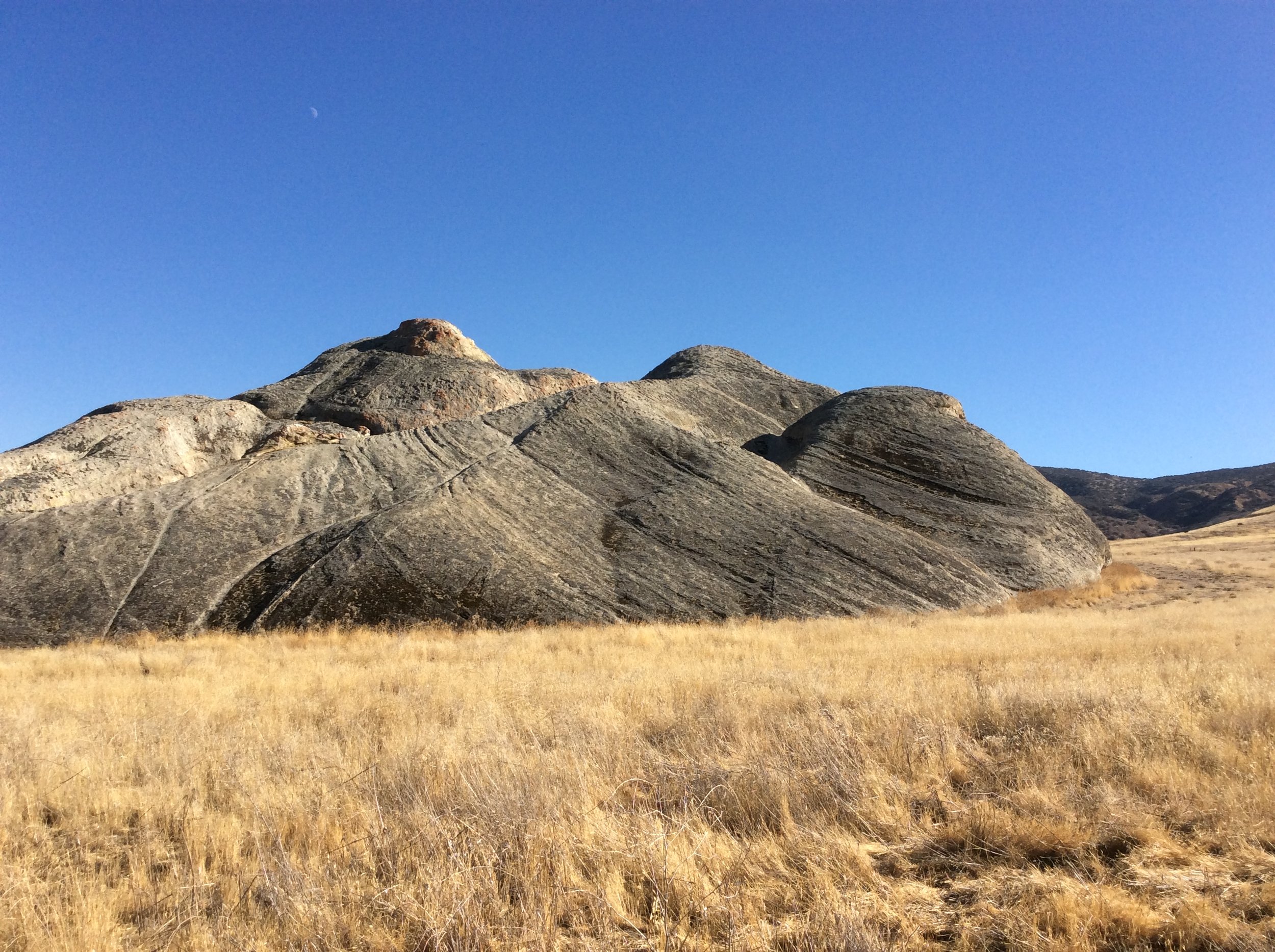
Intriguingly enough, the sacred site known as Painted Rock (located in the same county in California where I live and make my domicile), appears to provide important additional evidence supporting the revolutionary paradigm of ancient human history described above. I have written two extensive blog posts about this incredibly significant ancient sacred site -- most recently this post published earlier this week, as well as this post published about a year ago.
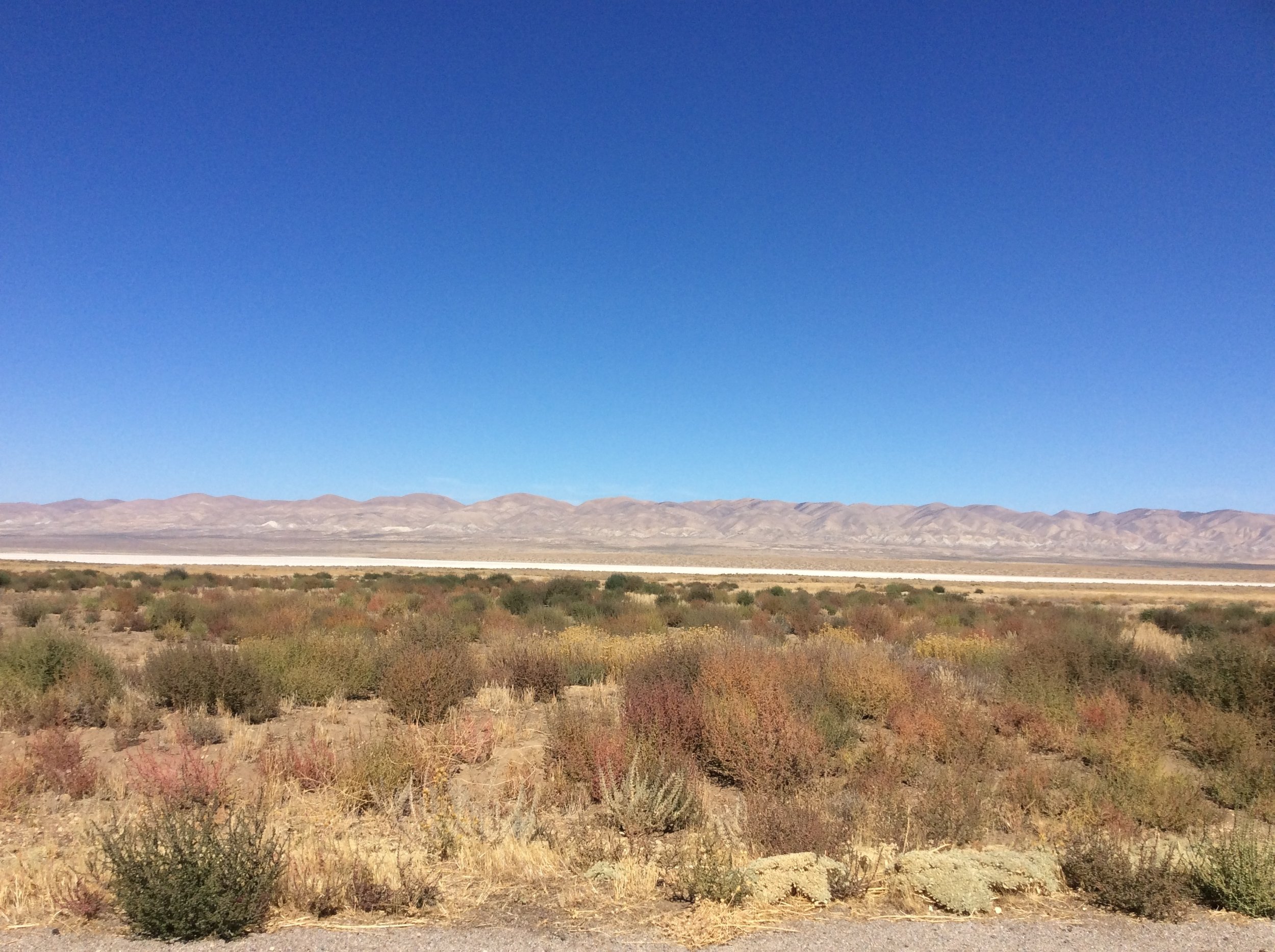
Even conventional archaeologists agree that Painted Rock, located in a long narrow valley known today as the Carrizo Plain, and the surrounding country was a site of extensive human occupation and activity stretching back to at least 10,000 years before the present (to at least 8,000 BC).
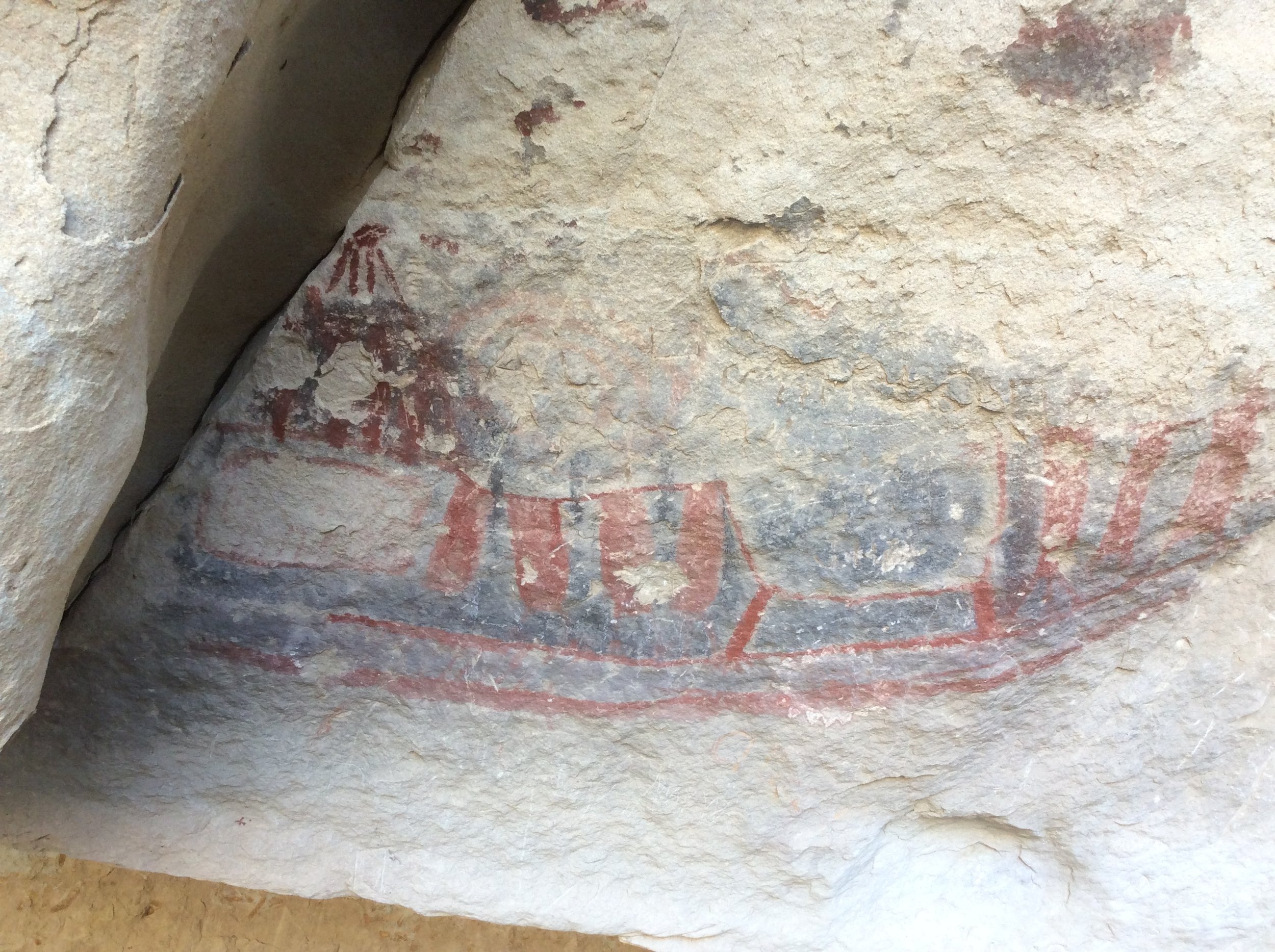
That date in itself is obviously significant in regards to the paradigm of ancient human history -- but even more so because the Painted Rock formation itself is home to a class of unusual and distinctive rock art which (even in its tragically damaged and vandalized condition) bears the unmistakeable evidence of the very same system of constellational outlining that informs the myths, scriptures and sacred stories found everywhere else in the world, from Australia to Africa to ancient China to ancient India, ancient Japan, ancient Greece, ancient Mesopotamia, across the Pacific Islands, and even in just about every story in the Old and New Testaments of the Bible!
Even in its now criminally-defaced condition, the sacred enclosure can be seen (to this very day) to display outlines that I am convinced correspond directly to the constellations Scorpio, Ophiucus, and Aquarius (some recent photographs of these are shown in the previously linked posts). Additionally, photographs taken prior to the deliberate destruction of some of the artwork appear to indicate undeniable correspondences to the constellations Pisces, Aquila, and Gemini (and probably to others as well).
Although some scholars believe that the rock art itself may not date all the way back to 8,000 BC, that is not firmly established, and because there are datable markers of human habitation that may go back all the way to 8,000 BC, the presence of sacred rock art with clear use of recognizable constellational (and indeed zodiacal) outlines in the most distinctive rock formation in the landscape of the Carrizo Plain appears to be a strong argument for the use of these constellations in a sacred capacity in North America at dates approaching or even surpassing the antiquity of the earliest surviving Pyramid Texts of Egypt or cuneiform tablets of Mesopotamia.
Perhaps equally important and intriguing is the fact that this ancient sacred stone enclosure, which preserves the rock art described above, is itself evidence of potentially catastrophic or cataclysmic geological processes in Earth's distant past.
The massive stone ring known today as Painted Rock is a sandstone extrusion located towards one edge of an elongated basin or canyon, which even now contains an alkali dry lakebed consisting of a layer of mineral salts, similar to the salt flats of Utah.
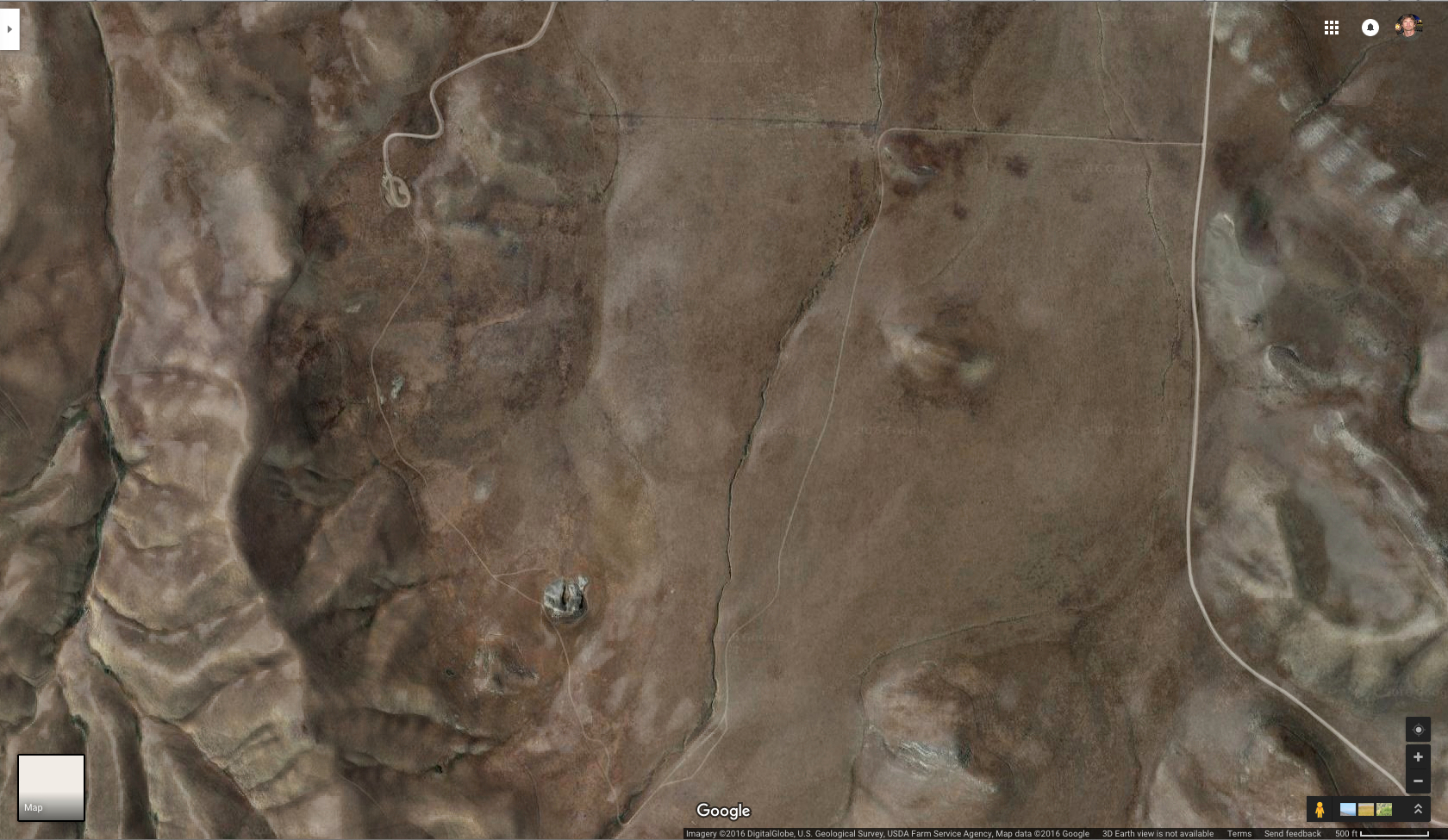
Below is a screenshot from Google Maps showing the location of Painted Rock in the Carrizo Plain: