Ahimsa, blessing, and the coils of the Python

Ahimsa, blessing, and the coils of the Python

image: Wikimedia commons (link). 

In an important episode in the Mahabharata, we see the most physically-powerful and menacing of the five Pandava brothers -- Bhima whose might is equal to that of ten thousand elephants -- exulting in his strength as he plows through the woods, frightening the animals with his loud whoops and shouts, and pursuing even the mighty snakes into their lairs.

Then he encounters a serpent who turns out to be more than his match.

We find this episode related in Book 3 of the Mahabharata, beginning in section 177:

Then the mighty Bhimasena, like unto the Lord of the Celestials, saw a serpent of colossal proportions, living in one of the mountain fastnesses and covering the cave with its body and causing one's hair to stand on end. It had its huge body stretched like a hillock, and it possessed gigantic strength, and its body was speckled with spots and it had a turmeric-like color and a deep copper-colored mouth of the form of a cave supplied with four teeth; and with glaring eyes it was constantly licking the corners of its mouth. And it was the terror or all animated beings and it looked like the very image of the Destroyer Yama; and with the hissing noise of its breath it lay as if rebuking. And seeing Bhima draw so near to him, the serpent, all on a sudden, became greatly enraged, and that goat-devouring snake violently seized Bhimasena in his grip. Then by virtue of the boon that had been received by the serpent, Bhimasena with his body in the serpent's grip, instantly lost all consciousness. Unrivalled by that of others, the might of Bhimasena's arms equalled the might of ten thousand elephants combined. But Bhima, of great prowess, being thus vanquished by the snake, trembled slowly, and was unable to exert himself. And that one of mighty arms and of leonine shoulders, though possessed of the strength of ten thousand elephants, yet seized by the snake, and overpowered by virtue of the boon, lost all strength. He struggled furiously to extricate himself, but did not succeed in any wise baffling this [snake].

Bhima was, as Everett McGill might say, "in a tight spot."

The serpent informs Bhima that he was once a respected sage, in fact Bhima's distant ancestor Nahusha, but was being punished for his pride by being changed into a serpent.

He also informs Bhima that he must devour him.

For those who wish to read the entire Mahabharata before they find out whether or not the snake has Bhima for dinner, stop here and come back in a few months when you've finished.

For the rest of the readers (or for those who have read the Mahabharata already and know the outcome), turning to section 178 and 179 we learn that Bhima's brother Yudhisthira the just, noticing the absence of Bhima and experiencing a series of omens that warn Yudhistira that Bhima is in grave danger, comes looking for him and finds the mighty one coiled in the grip of the great serpent.

Realizing that this can be no ordinary snake, Yudhistira addresses it respectfully, to learn how it can possibly hold the invincible Bhima helpless in its grasp. Nahusha informs Yudhistira of his true identity as their distant ancestor, the fifth in descent from the moon in fact, and tells the eldest Pandava that he can only be released from his serpent-form by one who can correctly answer questions regarding the nature of the incarnation of the soul and its release.

Yudhistira, who has spent his life in careful contemplation of just such questions, and who has moreover spent much time in discussion with the forest ascetics who have chosen a life in pursuit of spiritual matters, says to Nahusha, "Ask away!"

What follows perhaps is best to read in the Mahabharata itself (following the links above, and if you are able to read Sanskrit you can also find this passage in the original language, beginning here in section 178). 

In summary, however, the mighty serpent asks Yudhistira how one may achieve transcendence from the cycle of incarnation (he firsts asks Yudhistira who is a true Brahmana, and receives the answer that it is not in fact determined by birth or by caste but rather by purity and virtuous conduct, which is an important subject for another discussion).

Yudhistira answers Nahusha, in section 180 that the one who achieves the transcendent state is the one who "bestows alms on proper objects, speaks kind words and tells the truth, and abstains from doing injury to any creature."

Thus we see that the ancient wisdom teaches us that acts and words which can be categorized as blessing are critical to our purpose here in this incarnate life, as is the principle of doing no injury to others.

The word used for doing no harm is ahimsa.

Hearing this answer, and having finally found one who can put it into words, Nahusha is released from his long millennia of bondage in the form of a serpent, and ascends into the higher realms. Bhima is freed from the enervating coils of the enchanted python, after he had already resigned himself to being devoured for his carelessness and pride.

This episode, like nearly all the others in the Mahabharata (and in all the world's ancient myths, scriptures and sacred traditions) can definitely be found to have its origin in the celestial pattern of the stars and constellations. In this particular case, Bhima is almost certainly played by the important constellation Ophiucus, whom we have encountered previously in our examinations of the story of Jonah and the gourd, as well as the story of Mukasa in Africa and indeed in the events of the life of the Buddha.

Note the details of the serpent's initial description, how he is said to have its huge body shaped into the form of a hillock , and indeed to cover the entire mouth of a cave -- both of which can be seen as clues regarding his celestial identity. He also is described as having four teeth, which almost certainly refers to the four stars in the head of the serpent held by Ophiucus in the sky. Additionally, the great snake is described as looking like the very image of Yama the Destroyer, who can also by this and other clues from the scriptures of ancient India be identified with Ophiucus.

Furthermore, the constellation Ophiucus -- while usually envisioned as holding a serpent -- can also be envisioned as having a serpent wrapped around his body, just as Bhima does once Nahusha coils himself about the great hero and takes away his strength.

Of course, you probably won't be able to figure any of that out for yourself if you use one of the many "standard" diagrams for the constellation Ophiucus (which are usually terrible -- see for example this outline).

However, if you use the outstanding system first published by H. A. Rey in 1952, then you can begin to speak "the language of the ancient myths." Below is the outline of Ophiucus as envisioned by H. A. Rey (and superimposed upon the stars as seen in the open-source planetarium app stellarium.org).

Having determined (just in case it was not clearly evident from the presence of a talking serpent) that this episode from the Mahabharata is not intended to be understood as literal history but that it is a celestial allegory, we can then begin to ask ourselves what it might mean -- why was it given to us, and what knowledge is it intended to convey?

Without going into too much depth (the reader is invited to contemplate all the profound implications of this story for himself or herself, as with all the other sacred wisdom given to humanity in the form of the ancient myths), it seems clear enough that this story depicts our human condition, bound within the coils of incarnation.

Both Nahusha, who has been turned into a serpent, and Bhima, who is trapped within the coils of the serpent and finds himself deprived of his accustomed celestial strength, can be seen as depicting the condition of the soul when it comes down from the realm of pure spirit and is bound in a body made of the lower elements of earth and water (clay) -- "this mortal coil," as Shakespeare calls it in Hamlet.

The serpent, of course, is a perfect symbol of the cycles of incarnation, because it sheds its skin as if sliding into a new form and leaving the old one behind, over and over again.

It is also a perfect symbol of our incarnate condition in that it binds and constricts its prey (Nahusha is described as a mighty python or constrictor), just as this material existence seeks to wrap its charms about us and cause us to become entangled in the exigencies of the physical life and its charms, robbing us of our memory of our celestial or spiritual nature (and note that Bhima is held more by the charms of the mystical serpent than by its actual strength, and that when he falls into its clutches he is in fact described as losing consciousness for a period of time before recovering his wits).

Fans of The Matrix (a movie which came up during my recent Grimerica interview) might envision Neo when he is still in the grip of "The Matrix" itself -- penetrated and held fast by its many hideous serpentine coils.

In this episode from the Mahabharata, of course, the most important aspect of the entire encounter is the question of how one can overcome the coils of the great serpent -- how one escapes the curse (both for Bhima and for Nahusha, who has been made to crawl on the ground as a python in order to learn something for his own benefit and eventual transcendence).

The answer is given quite plainly in the question-and-answer between Nahusha and Yudhistira. Clearly, the ancient text seems to imply that the twin concepts of blessing and ahimsa are absolutely critical to our escape from the coils of the python, and from the danger of its eventually devouring us.

But note also that the serpent is a powerful symbol of wisdom around the world (including in the texts of ancient India, as well as in both the Old and New Testaments of the Bible, where we are admonished to be as wise or cunning as serpents), and that the concept of raising the serpent

is central in Yogic and other spiritual practice (see previous discussion here for example), in the deity Okeanos and Acheloos (also spelled Achelous) in ancient Greece -- who echoes a similar divine force found in ancient Egypt and related to the divinity of the Nile River itself but also to the heavenly river of the Milky Way and to the internal kundalini within the "microcosm" of each and every human being -- and also in the episode of the serpent on the pole described in the book of Numbers and referenced again in the New Testament (and many more examples can be found around the world).

Thus the idea of being "cast down" into this world -- either as a serpent or "unconscious within the coils of the serpent" -- and then overcoming and "raising the serpent" through right conduct that involves being a blessing, invoking blessing, and not doing violence, is a vital central theme throughout the world's ancient wisdom . . . and therefore was seen as being vital and central to our own acquisition of the gnosis or understanding or transformation which is our soul's purpose in coming into the material world in the first place.

Ultimately, I believe that this concept is identical to that which is stressed throughout the Bhagavad Gita (which is part of the Mahabharata, and can be found in book 6 of the epic), regarding the admonition -- constantly presented to Arjuna by the Lord Krishna -- to do what is right without attachment.

This is worth contemplating deeply.
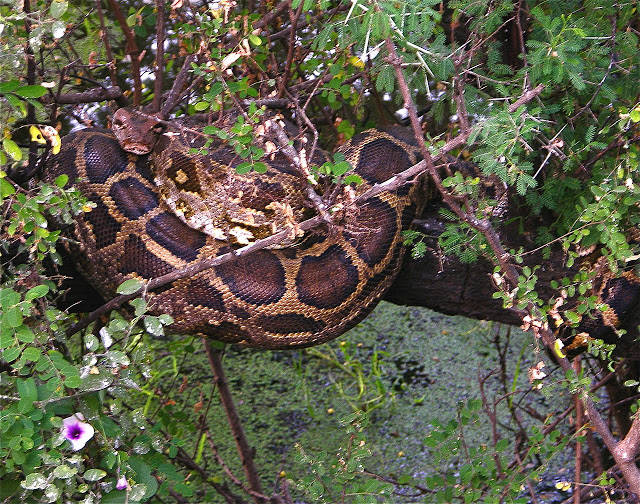
image: Wikimedia commons (link).
Armistice Day 2015

Armistice Day 2015

image: Wikimedia commons (link).

Those who lived through the unspeakable devastation of World War I set aside the date of November 11 as a day to promote peace and "friendly relations with all other peoples."

The day was commemorated as Armistice Day, the word "armistice" being composed of two Latin words meaning "weapons" and "to stop" -- thus, the cessation of armed hostilities.

The word solstice derives from the same Latin word: sistere, "to stop." Solstice refers to the two points of the year at which the sun's progress northward or southward along the eastern and western horizons as it rises and sets can be seen to stop and pause prior to turning back around and going the other direction.

The ancient wisdom contained in the collective myths, scriptures, and sacred stories of the human race all use the cycles of sun between the solstices as part of a deep metaphor relating to the human soul and the experience of incarnation, and the goal of calling forth and elevating the invisible divine aspect in ourselves and others (blessing) as opposed to denying it and debasing it and reducing ourselves or others to objects and ultimately to mere matter (cursing).

Their metaphorical portrayal of the players from the heavenly sphere in the form of human men and women works to convey, among other profound messages, that each and every person reflects and embodies the infinite heavens, that each one is in fact a little universe -- a microcosm -- of infinite value and dignity, and that the act of debasing or destroying another human being through violence will ultimately damage the one who engages in it.

Simone Weil made this exact argument, based upon her inspired reading of the ancient text of the Iliad, in her famous essay "The  Iliad, or 'The Poem of Force'" (1940).

In the United States, following the "cessation of the most destructive, sanguinary, and far-reaching war in human annals" (World War I), both houses of Congress declared that "it is fitting that the recurring anniversary of this date should be commemorated with thanksgiving and prayer and exercises designed to perpetuate peace through good will and mutual understanding between nations."

Unfortunately, if you look up the word "armistice" in the dictionary you will see that it is usually used to mean a temporary truce of some sort, which is what the end of World War I turned out to be. 

Many have also argued that the original intent of the day that was set aside -- by those who had endured the loss of so many beloved friends and family members during World War I -- with the hope that people everywhere would use the day to promote peace, good will, mutual understanding, and friendly relations has (at least in the United States) been somewhat forgotten. 

When, following the cease-fire in Korea, the name of the day was changed from "Armistice Day" to "Veteran's Day" in the US, based on the argument that "Armistice" seemed to refer only to the end of World War I, a subtle difference was introduced. 

The original declarations said nothing about honoring the veterans of World War I: the original statements declaring the importance of remembering November 11 were entirely focused on making the day about furthering peace, good will, and mutual understanding, based upon the unspeakable carnage which they referred to right in their opening line. 

This does not mean those people who had lived through World War I were being disrespectful to veterans -- but the focus was on something completely different than what has come to be the focus today.

Here is a link to a page from a group called Veterans for Peace calling for a return to the original focus of Armistice Day as a day on which to promote peace, good will, mutual understanding, and "friendly relations with all other peoples."

Welcome new friends from Grimerica!

Welcome new friends from Grimerica!

Big welcome to all new visitors -- and returning friends -- from the wonderful land of Grimerica!

It was an honor as always to be welcomed into The Igloo and to have an opportunity to discuss matters mysterious and mythological with Darren and Graham, who are always fantastic hosts as well as expert and experienced interviewers -- and to get a spontaneous on-show The-Matrix-synchronicity rated at 9.5 on the Grimerica Scale (which is unheard-of and may have been an aberrant data-point, but definitely a new league record for me).

It was the first live-and-on-the-air announcement of the publication of my new book, Star Myths of the World and how to interpret them: Volume One, as well as the first on-the-air debut for my dog, Zephyr, who wanted to interject comments at all the most-important points of the show and finally had to be unceremoniously kicked out of The Igloo into the cold (poor guy).

It was also an honor to meet James from Wasted Nation and his friend Nadz, who were also at The Igloo during the visit. They were fresh from a Halloween show during which it was revealed that they look suspiciously like the same bunch who kept giving Daniel-san a hard time on Halloween some years ago (see Wasted Nation photo here), which made me a little nervous at first, until I remembered that I had Mr. Miyagi on my side and also that they all became friendly at the end and wished Daniel all the best after he defeated their leader in the tournament (hopefully that wasn't a spoiler for anyone).

Be sure to check out their music and invite them to perform gigs in your town if you have any connections in that department.

During the course of this visit to Grimerica, we touched on a host of important subjects -- below are some links to help anyone who might want to explore some of them further:

  • The Star Myths section of my davidmathisen.com page, which contains links to a "Star Myth Index" that can direct you to most of the Star Myth discussions that have been published on this blog over the years.
  • The discussion of the famous story of the Judgment of Solomon found in the ancient Hebrew Scriptures (often referred to as the Old Testament of the Bible), and analysis of its celestial connections and possible meanings. I also made a video about this important episode from ancient scripture.
  • The two-part discussion of some of the important stories from the 1,001 Nights (also known as "The Arabian Nights") which was the first Star Myth analysis to use the format which is used in the new book, in which the myth itself is presented first and then the analysis is presented after you have the chance to think about the celestial correspondences for yourself. Here are the links to "Part One" and "Part Two" of that discussion of the 1,001 Nights.
  • The discussion of the episode in which Ares (Mars) confronts the two giants Otus and Ephialtes, and finds himself unceremoniously shoved into a brazen jug for his efforts. That discussion also mentions the important star Fomalhaut in the Southern Fish, and has a link to a previous post which talks you through some tips on locating Fomalhaut in the sky (this happens to be a good time of year for finding Fomalhaut, but because it is located fairly far to the south on the celestial sphere it is not visible from some of the more northerly latitudes).
  • Some discussion on the importance of Orion. Orion is such an important figure in the Star Myths of the world that his significance has been mentioned in too many posts to link-up here, but this link will take you to some discussion of Orion in conjunction with the vital concept of "raising the Djed column," which is also discussed in other posts here, here and here as well as in videos here and here (among others).
  • The story of Samson, which was really the one that started my journey of seeing that the stories in what we today call the Bible are almost entirely celestial, from first to last. Also, here is a video about the importance of the Samson-cycle, entitled "The Samson Myth is all about YOU."
  • The assertion that the Bible is essentially shamanic in nature.
  • The assertion that all the myths of the ancient world are essentially shamanic in nature.
  • The assertion that human beings appear to be designed to be able to access and make contact with the Invisible World.
  • The incredible work of Dr. Peter Kingsley.
  • The seminal 1969 book Hamlet's Mill, which was one of the first to offer a comprehensive argument that the myths of the world appear to be connected by some kind of ancient celestial system. This kind of argument had been made before, often with regards to specific myths or sets of myth (the Reverend Robert Taylor made an extensive analysis of the celestial foundations of the stories in the Old and New Testaments of the Bible during the early 1800s), but Hamlet's Mill is important for its examination of evidence that all of these celestial references appear to be "fragments of a lost whole" whose origin and purpose is now largely forgotten to history.
  • The discussion in the dialogues of Plato in which the philosopher has Socrates presenting some extremely important perspectives on the right and wrong way to approach the myths and sacred stories.
  • A recent post with details on the dazzling planets Jupiter and Venus in the pre-dawn sky, appearing along with Mars in the region of Leo the Lion and in an early-morning sky that includes some of the biggest and brightest constellations visible from the earth (and yes, Graham was exactly right during the show when he said he thinks he sees Orion off to the south and west in the pre-dawn sky this time of year).
  • Some discussion of what these ancient Star Myths could have been intended to convey, which I believe involves many layers (possibly endless layers) of profound knowledge, but which certainly points towards "raising the Djed column" in ourselves and others, blessing and not cursing, and the knowledge that we have a divine component or a Higher Self and knowledge of how to rectify our internal relationship with our "divine twin."

We wrapped up the discussion with some thoughts on the importance of music as both a pathway to and a sort of "messenger from" the Invisible Realm. For some previous discussions on the incredibly central importance of music, see for example:

and

Once again, it was a pleasure to discuss these important topics -- which concern us all -- with Graham, Darren, and the rest of Grimerica! Thanks for having me!

I truly hope to have another opportunity to return to that unique land in the future (see Grimerica passport, below).

Please support their efforts through their "value-for-value" system, which enables them to keep all of their broadcasts completely open to the world, with no "paid section" and no advertisements or sponsorships that could limit their freedom to discuss any and all topics and to pursue the evidence in whatever direction that it leads!

Here are the links to this episode's page (#142 -- big thank-you to Napoleon for the show-art). To watch as a YouTube video, click here. To download the audio file to listen at your convenience, right-click (or control-click) here and select "save as" or "download." To go back and refresh your memory of my previous trip to Grimerica (show #99 I believe), click here.

original image: Wikimedia commons (link). Modified.


Scott Onstott reveals the profound message of Leonardo da Vinci and his art

Scott Onstott reveals the profound message of Leonardo da Vinci and his art

Scott Onstott has two new books out relating to the divine proportion, one entitled The Divine Proportion and one exploring Leonardo da Vinci's incredible encoding of the divine proportion into his paintings entitled Secrets in Plain Sight: Leonardo da Vinci.

Scott's amazing work includes his analysis of the significant and esoteric proportions, patterns, and geometries found around the world in the location and design of cities, parks, monuments, and buildings, which he has detailed in his extremely popular video presentations entitled Secrets in Plain Sight, Volume 1 and Volume 2.

Scott also analyzes sacred geometries, proportions and patterns present in the natural world, including in the relationships of the earth, moon, sun, and the planets of our solar system.

His work has been discussed on this blog previously here: "Scott Onstott and the metaphor of form."

I have been working my way through Secrets in Plain Sight: Leonardo da Vinciand highly recommend it for your own careful consideration. 

It is worth pondering long and deeply.

Scott begins with a brief but powerful summary of the incredible achievements and ongoing importance of Leonardo himself (1452 - 1519).

He then explains the concept of the divine proportion (the golden ratio, the proportion of which is designated by the Greek letter phi) and its mysterious qualities -- with accompanying diagrams and labeled illustrations that should make its properties more understandable than perhaps any discussion of the golden ratio that you have encountered before (Scott is a trained architect and a teacher and author on the subject of architectural visualization software and techniques).

The discussion reveals the mysterious, unchanging, infinite, and self-contained properties of the divine proportion, and why and how it conveys aspects of what we might call the Infinite Realm, the Divine Realm, the Invisible Realm. 

As you open your eyes to what is being presented, you will realize that phi does not just point us towards the Infinite: in many ways it actually manifests the Infinite Realm in itself, and impresses it upon our deeper understanding.

Scott then presents stunning evidence that demonstrates convincingly, beyond any doubt, that Leonardo da Vinci incorporated this divine ratio -- and its unfolding in the infinitely self-generating golden rectangles and the golden spiral that they create (the book shows how this spiral generates) -- into his art, over and over again, and with a degree of precision that indicates he knew exactly what he was doing.

But why?

Clearly, the golden ratio resonates powerfully with us -- our own bodies, and many aspects of the universe around us (perhaps every aspect of the universe around us), exhibit the golden ratio or phi on nearly every level. Scott even visually illustrates the way that DNA, the basic code of all known life, unfolds according to the golden ratio at its most fundamental level.

The golden ratio is aesthetically pleasing and attractive, even if we do not consciously recognize its presence.

But as Scott shows the golden rectangles and spirals present in the art of Leonardo da Vinci, he uncovers evidence that da Vinci was incorporating this divine proportion to convey and even more powerful message. As Scott says in the description of Secrets in Plain Sight: Leonardo da Vinci on his website

here:

Leonardo's secret pointing to the divine proportion's divisions to physical and illuminated third eyes suggests he saw the divine not just in a transcendent heaven, but immanently in the human body and in the world.

That sentence is worth reading a few times for full effect.

What Scott's illustrations in the book, in which he overlays golden spirals upon the artwork of da Vinci, reveals quite clearly is that the spirals almost inevitably concentrate upon one eye of a human subject in the painting, or (even more frequently) upon the point of the "third eye" in the center of the forehead.

The implication, as Scott makes plain in the quoted sentence above, is that Leonardo da Vinci was conveying the message, using phi as the representative of the Divine and the Infinite, that the very same Infinite which unfolds in every aspect of the physical universe around us (and which shows that the Invisible Realm is present at every point in the seemingly-material cosmos) is also present in each and every man and woman: the divine in us.

And, as has already been said above, when da Vinci "drops phi" into his artwork, he is not just placing a symbol of the Divine or the Infinite into the art: he is putting an actual unfolding of Infinity right onto the canvas! The golden proportion actually is infinite, in and of itself, and it actually does begin to generate infinite spirals and an infinite rectangle-series, the moment you place it onto the page!

Note carefully what Scott Onstott is saying in that sentence above about the presence of this Infinity in both the heavens and the human: da Vinci recognized that it was present everywhere, both on the incredible scale of the heavens, and in the proportions of the human body, and that it "spirals inwards" to our eye (the "window to the soul") to suggest that the divine is there as well.

The divine ratio is present in every strand of DNA, and in the astronomical distances and scales with which our infinite universe is framed. It is operating everywhere and at all times, effortlessly unfolding and contracting, outward to the most distant galaxies and inward to the secret universe of our interior world.

The illustrations in Scott's book must be seen to be fully appreciated. I would suggest that a physical copy belongs on the shelf of every library, public or private, home or university.

But that's not all.

Because there appear to be even more "secrets in plain sight" hidden in the artwork of Leonardo da Vinci (and conveying the very same message of the inner connection to the Infinite, the inner connection to the Divine), because I would argue that some of the artwork that Scott examines also reveals da Vinci's understanding of the esoteric celestial system of metaphor operating at the foundation of the sacred stories and scriptures of the human race.

The very first painting by Leonardo that Scott presents in his book (the paintings are presented and discussed in chronological progression) clearly reveals da Vinci's awareness of the celestial metaphor underlying his subject, which is The Anunciation by the angel Gabriel to the Virgin Mary, depicted in Annunciazione by da Vinci, 1472:

image: Wikimedia commons (link).

Not only does this painting show that the twenty-year-old Leonardo was already masterfully incorporating phi proportions and spirals in the composition of his art (as Scott Onstott's diagrams demonstrate), but it also appears to indicate that the artist was very familiar with the esoteric connection between the Biblical personages and the constellations of the heavens.

I have already published an extensive analysis of the celestial correspondences in the critically-important New Testament story of the Annunciation, in which the angelic messenger declares the coming of the Divine to Mary -- the Divine made to dwell in the flesh. 

That analysis shows that Gabriel is almost certainly associated with Mercury or Hermes -- the messenger of the gods in ancient Latin and Greek mythology -- and the closest planet to the sun (which is why Gabriel explains that he "stands in the presence of God" in Luke 1:19). Gabriel, like Mercury, is always depicted carrying a wand (often in the form of certain long-stemmed flowers, in the artwork depicting Gabriel).

But although Gabriel is almost certainly associated with the actual planet Mercury (which of all the planets can most accurately be said to "stand in the presence" of our blazing sun), he can also be identified with a specific constellation in our night sky, and one who appears above the constellation who almost certainly corresponds to the Virgin Mary.

Leonardo da Vinci seems to have been well aware of these celestial correspondences, simply from the way he depicts his subjects in The Annunciation, with Gabriel kneeling and extending his hand in a distinctive gesture (while also holding the flower-wand in his other hand), and Mary seated in a distinctive posture herself, while extending one arm towards Gabriel (and turning her head "just so," in a way highly reminiscent of her celestial counterpart).

Take a look at this portion of the sky, containing the important constellations Virgo the Virgin, and her constant companion Bootes the Herdsman:

Can you see da Vinci's Annunciazione in the stars depicted above?

How about now:

The angel Gabriel is almost certainly played by the constellation Bootes, who appears to be in a seated position in the sky but who is often depicted as kneeling in Star Myths from around the world, such as when he plays the role of the Buddha in Asia and Mukasa in Africa (analyzed in this previous post) or the role of Bodhidharma (also known as Da Mo or Daruma, analyzed in this previous post).

The angel is clearly depicted as kneeling in Leonardo's 1472 painting of the Annunciation.

The angel is also holding a wand, which corresponds to the long "pipe" of the constellation of the Herdsman shown above. This wand is the same feature which appears as the flute of the god Krishna in the scriptures of ancient India, as discussed in this previous post.

You can also find depictions of Krishna (including statues and icons) in which the outstretched hand of the Lord Krishna makes a hand gesture which is very similar to the distinctive hand-gesture that the angel Gabriel is making in this artwork by Leonardo da Vinci (and which is seen in many, many other depictions of the angel Gabriel and the Annunciation down through the centuries). Here's one, from a statue of Krishna with one upraised hand:

image: Wikimedia commons (link).

Note that if you look carefully, you can also see that Krishna is holding a flute in a hand on the other side from his upraised hand. 

[All of these connections between Gabriel, Hermes/Mercury, Buddha, Da Mo (or Daruma) and other Bootes-figures from the Star Myths of the world should show quite convincingly that all these sacred texts and mythologies are united in their foundation and their esoteric message (contrary to what has often been taught, especially by those who wish to take the ancient myths and scriptures literally, instead of esoterically).]

Behind the seated (or kneeling) form of Bootes in the night sky is the distinctive arc of the Northern Crown, or Corona Borealis. At first, I thought that this arc-shaped constellation might show up in the painting by da Vinci of the angel as the arc in the angel's wings, but after further consideration I decided that Leonardo might actually be envisioning the wings to be formed by an interesting and somewhat unique way of connecting the stars along the front edge of the constellation Hercules. If so, then I believe that the Northern Crown is probably functioning as the halo of the angel.

Turning now to the figure of Mary herself, it is fairly intuitive to connect her with the stars of Virgo the Virgin. Previous posts have discussed the importance of the connection inherent in her name with the word for "sea" or "ocean," and how the celestial Virgin stands at the edge of the metaphorical "sea" in the heavenly cycle of the zodiac (see the discussion here for example). 

But Leonardo includes enough clues in his painting to demonstrate beyond a doubt that he is referring to the outline of Virgo in the heavens. 

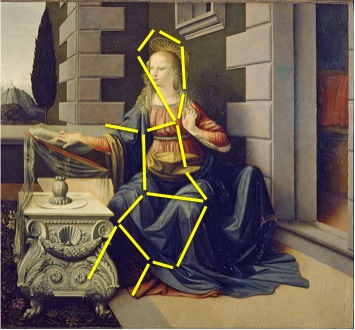
If you look at the seated posture of the constellation Virgo, and then look at the angle at which da Vinci has chosen to depict his Virgin Mary in Annunciazione, you will see that one would be hard-pressed to paint a more accurately depiction of the constellation than he has in his work. Her legs are apart and parallel, her body bends at approximately the same angle, and her outstretched arm points towards Gabriel just as the outstretched arm of Virgo points towards Bootes in the sky.

Below is a detail of Mary from da Vinci's painting, with the outline of Virgo superimposed. Note that even the angle of Mary's head in the painting and the way in which she has it slightly turned evokes the  form of the zodiac Virgin:

I would thus argue that Scott Onstott's title accurately describes this aspect of Leonardo's work as well: da Vinci is "hiding" these incredible secrets in plain sight!

I would also argue that by incorporating these celestial patterns, Leonardo is reinforcing the very same message that Scott argues Leonardo is conveying through his incorporation of the divine proportion in his paintings:

Just like the ancient myths and sacred texts themselves, Leonardo is bringing down the denizens of the celestial realm and incarnating them in the human form!

He is declaring that the Infinite and the Divine dwell in human flesh. The stars above evoke the Infinite, and we ourselves reflect the stars (as above, so below).

Just as the universe unfolds on the proportions of phi on planetary and galactic scales, and just as we ourselves reflect this same proportion in our bodies and even our strands of DNA, the Infinite and Divine realm that interpenetrates the material cosmos also unfolds like a spiral inside our inner universe (converging on the window of our soul, our physical eye or our spiritual "third eye").

I am extremely grateful to Scott Onstott for writing Secrets in Plain Sight: Leonardo da Vinci, and for bringing home in such a visual and understandable way the genius and the ongoing importance of Leonardo and his work, and most importantly his message -- the same message, ultimately, as that brought by the angel Gabriel: the message of the divine coming down to earth, and dwelling in men and women.

----------------

In addition to ordering them from Scott's own website (linked above), you can also find Scott's books on Barnes & Noble and on Amazon.

Introducing Star Myths of the World, and how to interpret them: Volume One

Introducing Star Myths of the World, and how to interpret them: Volume One

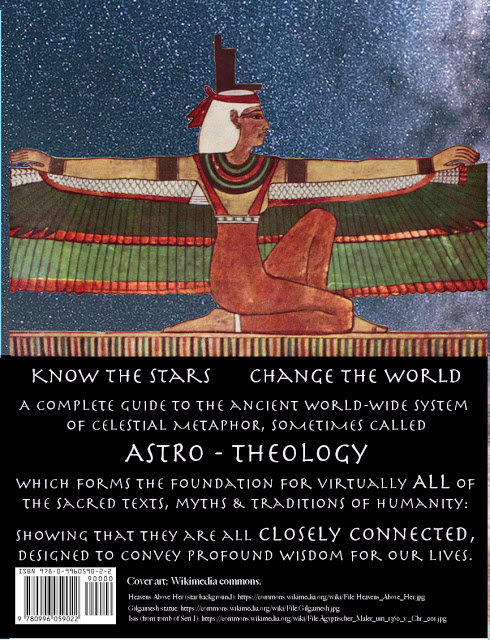
I am very excited to announce the publication of a new book, the first volume in a series entitled Star Myths of the World, and how to interpret them.

The book is intended to do two things, primarily:

  • to present evidence, using representative myths, scriptures and sacred traditions from many different cultures on every part of the globe, which demonstrates the existence of an ancient system of celestial metaphor that forms the bedrock foundation of humanity's shared mythological inheritance.

and

  • to demonstrate the outlines of this system and the "vocabulary" and "grammar" that it uses, so that readers can begin to understand the "celestial language" in order to converse with the ancient myths and sacred stories for themselves -- in order to benefit from their profound wisdom in new and unexpected ways.

The goal of the book is not to explore or explain every single myth or story in any particular tradition, but rather to examine a few representative samples from many different traditions from all across the planet, with the aim of advancing the twin goals described above.

Volume One examines representative myths, scriptures, and sacred traditions from Australia, Africa, the Americas, the Pacific, Ancient Egypt, Ancient Sumer & Babylon, Ancient India, China and Japan. 

Future volumes will continue the journey of exploration and discovery.

Please use this link to open a preview of Star Myths of the World, and how to interpret them: Volume One (or click on the image above of the front cover of the book, which will also take you to the preview file, which is an online pdf file).

To see some examples of many different Star Myths that I have analyzed using the same types of celestial patterns that are presented in the book, see for instance the list and links collected on this page. The new book elaborates and expands on some that have been addressed previously, while exploring many other Star Myths from around the world which to my knowledge have not been discussed in this manner before.

To purchase a copy of the book for yourself or for someone else, please feel free to order it from your favorite local bookseller. You can request they order as many copies as you would like by simply looking it up through the title, or the ISBN (that ISBN is shown below on the back cover, and it is included here for ease of reference: 978-0-9960590-2-2).

You can also go to your local library (or contact your current or former or nearby high school, middle school, college or university library) and ask them how you request that they add a book to their collection, so that you and others can borrow the book that way and benefit from what it may have to tell you about the ancient wisdom of humanity.

You can also purchase the book from a variety of online sources, including Barnes & Noble (here's their link) and Amazon (here's that link), although I'm sure your local bookseller might appreciate the opportunity to order it for you instead!

I truly hope that Star Myths of the World -- and the window that it opens onto the ancient scriptures, myths, and sacred stories -- will be a blessing to you.

Get ready for another visit to the Grimerica Show!

Get ready for another visit to the Grimerica Show!

Tune in this Tuesday, November 03 (2015) beginning at 

7pm Pacific Time,
10pm Eastern Time, and
8pm Grimerica Time (or whatever Time it is in your particular global meridian) 

to participate in a special Grimerica Double-Header, beamed world-wide from Graham and Darren's Mighty Igloo!

Your humble blog host and Star Myth investigator will be joining Graham and Darren for the second half of that Double-Header starting at 

9pm Pacific Time,
midnight Eastern Time, and
10pm Grimerica Time (and, just in case you haven't changed your clocks and watches from this weekend's time change, if that applies where you live, you may want to do that now so that you don't have a disconnect).

Of course, if you're not able to tune in live, the show will be available as a podcast afterwards, and I will provide a link to it here on this site.

However, one of the many cool aspects of the Grimerica Show is your ability to participate live in their Grimerica chat-room while Graham and Darren are actually "on the air" -- enabling you to add your questions, feedback, and suggestions while the show is taking place. Here's a link to the Grimerica chat-room

Another notable aspect of the Grimerica Show is the recognition displayed right in the Grimerica logo that we are all living in what appears to be an enormous world-wide matrix of ancient structures, now in ruins, whose remains can still be seen poking out of the sand, peeking out of the jungle, or (as with the moai of Rapa Nui) staring out across the waves of the ocean and the vast expanse of the Pacific.

The implications of this vast world-wide grid -- the scope and precision of which clearly shows evidence of extremely sophisticated understanding of the size and shape of our spherical earth, as discussed in this previous post among others -- should raise all kinds of questions regarding the true history of our species and our planet, and should cause everyone who thinks about it to realize that there are tremendous problems with the conventional historical timeline of ancient history that we are taught in school.

I believe that those questions are quite closely connected with the similar evidence we find which shows that the myths, scriptures, and sacred traditions of humanity -- virtually everywhere we look, on every inhabited continent on our planet, as well as across the islands that rise up out of the blue ocean -- are all built upon a common foundation of very specific celestial allegory.

The evidence for this shared foundation can be shown in so many myths from around the world that it is virtually indisputable: for nearly a hundred specific examples (with diagrams and sometimes with accompanying videos) see the partial list here.

These enormous, world-wide structures -- now largely in ruins -- seem to be related to just about all of the deep and (at times) seemingly unrelated subjects and mysteries explored by Darren and Graham and their guests on the Grimerica Show.

I am looking forward to returning to the Igloo and hope you'll join me for another trip to the wilds of Grimerica!

studying up for the show . . .

also . . .

link to travel back and re-visit my first trip to the Igloo here.

A meditation on "Some Words with a Mummy," by Edgar Allan Poe

A meditation on "Some Words with a Mummy," by Edgar Allan Poe

image: Wikimedia commons (link).

Just in time for Halloween (truly one of the most-important stations on the annual cycle, as discussed in this post from last year at this time), we have the tremendous good fortune to be approaching the 170th anniversary of the publication of one of my favorite short stories from that groundbreaking pioneer of the macabre, the unworldly, and the hauntingly symbolic: Edgar Allan Poe (1809 - 1849).

Poe's story "Some Words with a Mummy" was first published in Broadway Journal (New York) on November 01, 1845.

If you have never had the pleasure of reading it before (and even if you have), please stop whatever you're doing right now and give it a long, leisurely read, without rushing: you'll be glad you did!

The best way to enjoy any great work of literature, of course, is to read a physical text (if at all possible for your particular situation). If you do not have a copy of Poe's complete tales within easy reach, you can easily purchase a good collection here (where "Some Words with a Mummy" will be found on pages 805 - 821), or you might also try your local library.

Barring that, you can also find the complete text of this delightful tale online in various fonts and formats; if you don't mind consuming your Poe tales electronically, you can read "Some Words with a Mummy" in its entirety by following this link to a Project Gutenberg online edition.

Again, please don't go any further until you enjoy the story for yourself -- it is much better to read it first before I spoil it for you by focusing in on just a few of the many fascinating layers of this story, any one of which could lead to hours of profitable discussion and contemplation.

Also, if you have somehow arrived here because you are a student somewhere who has been given an assignment that involves your own interaction with this wonderful story, please don't interfere with your own chance to engage with the mind of Poe by clouding your view with the interpretations that I myself offer below: the observations that I offer below are simply the aspects of this rich story that resonate most strongly with what I feel like talking about at this particular moment in time, based on my own particular views and agendas. 

If someone has assigned this story to you in class, it is probably because he or she really loves "Some Words with a Mummy" and wants you to be able to have the experience of wrestling with it to try to determine what messages you think Poe was trying to send with this tale, or what messages the story itself (which does seem to take on a life of its own) is trying to convey to us, across the chasm and  the cobwebs of one hundred and seventy years. It would be a shame if you were to miss the messages that perhaps only you yourself can hear it whispering, because you let those messages be drowned-out by my own dronings on the subject!!!

All that said (and with the assurance that you have now read the story for yourself [here's that link  again]), let's take just a moment to unpack some of the incredible tidbits of wisdom Poe seems to be packing into this fantastic tale -- all of which are so fresh and so relevant to our situation at this particular moment in time that it is almost unbelievable to learn that they came from Poe's pen one hundred and seventy years ago, rather than just the other day.

The reader will immediately begin to perceive that Poe is poking fun at the characters in his story, including his narrator (who exhibits some of the signs of a classic "unreliable narrator," but who also seems to have participated in the entire encounter as part of an "ecstatic dream" or shamanic vision, which tends to elevate his narrative to another plane and which adds even more layers of complexity to the question of what is really going on in the story), nearly all of whom seem to be blissfully secure in the superiority of their own intellects and in the modern civilization whose distinguished representatives they take themselves to be.

Through a series of comedic comparisons in which the assembled intellectuals try to impress the grandeur of their modern achievements upon the bemused and patient representative from the ancient world -- the charming mummy Count Allamistakeo, who at times can barely contain his laughter at the ignorance of the moderns -- Poe reveals that the current conventional storyline of human history willfully ignores and papers-over the evidence of sophisticated technology and profound wisdom left by the most ancient civilizations (including, of course, Egypt, where some of the most abundant evidence has survived, but to which we could also add some of the stone structures, art and artifacts found in the many other parts of the world, including many sites across Europe, Africa and Asia but also in the Americas and in the vast Pacific, such as in the region of Puma Punku in South America, for instance, or in the islands of Pohnpei and Temwen in the far west part of the South Pacific) in order to maintain (just barely) a complete fairy tale that supports the present societal structure.

It is very noteworthy that Poe appears to have had a very strong sense of the complete inadequacy of modern engines of construction to even begin to replicate the feats of the builders of the vast ancient temples and monuments. At one point, for instance, the narrator (in an attempt to impress the Mummy), relates:

I spoke of our gigantic mechanical forces.
He agreed that we knew something in that way, but inquired how I should have gone to work in getting up the imposts on the lintels of even the little palace at Carnac.
This question I concluded not to hear [ . . . ]. 819.

Another humorous incident takes place when Count Allamistakeo is confronted with the modern condescending opinion of his understanding of the realm of the divine. 

Having informed the assembled nineteenth-century gentlemen that he is from the family of which the Scarabaeus is the insignium -- that is to say, in the Count's way of phrasing it, "of the blood of the Scarabaeus" -- one of the two members of the party who can speak ancient Egyptian addresses the Mummy:

"I thought," said Mr. Gliddon very meekly, "that the Scarabaeus was one of the Egyptian gods."
"One of the Egyptian what?" exclaimed the Mummy, starting to its feet.
"Gods!" repeated the traveler.
"Mr. Gliddon I really am ashamed to hear you talk in this style," said the Count, resuming his chair. "No nation upon the face of the earth has ever acknowledged more than one god. The Scarabaeus, the Ibis, etc were with us (as similar creatures have been with others) the symbols, or media, through which we offered worship to a Creator too august to be more directly approached."
There was here a pause. 814 - 815.

It is really quite remarkable to note that Poe is here, in 1845 (and remembering that the Rosetta Stone was only first deciphered in 1822, after a lapse of centuries during which all understanding of ancient hieroglyphics had been forgotten) making an assertion that the spiritual understanding of ancient Egypt was substantially the same as that everywhere else on the face of the earth -- only the symbols or media varying from one climate or culture to the next.

It is also remarkable that Poe happens to have selected the Scarabaeus as the insignia of the family from which Count Allamistakeo has come -- the family whose members at times submit to mummification while still alive (in the fictional realm of this satirical story, of course) in order to "travel through time" so to speak, surfacing in various periods to correct the errors of the historians (who invariably get it all wrong, all the time, according to the Count).

Could Poe have known that the Scarabaeus was anciently (in Egypt) the symbol of the summer solstice, the top of the year, the symbolic "top of the upraised Djed column" representing our divine nature (buried alive, as it were, in our material body)? See these previous posts for extended discussion of the evidence that the ancient Egyptian scarab was associated with the "upraised arms" of Cancer the Crab, and from there to the entire theme of "raising the divine nature":

"Scarab, Ankh and Djed,"

and "Summer Solstice, 2014."

See also the extended discussion in the previous post entitled "Ambrose and Theodosius" for abundant evidence that the ancients understood this meaning of the symbol of the Scarabaeus, and that early Christian theologians even went so far as to use the term to refer to Christ upon the Cross -- which certainly throws a new light upon the significance of Poe's decision to have Count Allamistakeo declare that he himself (this representative who has come back from the dead) is "of the blood of the Scarabaeus."

In fact, that post cites a direct quotation from the ancient literalist Christian Bishop Ambrose, whose power was so great that he was able to deny access to mass by the Emperor of Rome at the time, in which Ambrose speaking of Christ describes him as: "Him, I say, who, as a scarabaeus, cried out to his Father to forgive the sins of his persecutors" (link to the entire ancient speech from AD 394 here).

It would be quite a stretch to argue that Poe simply used this phraseology of "the Scarabaeus" and the "blood of the Scarabaeus" by coincidence or by accident. In fact, as a young man of seventeen, Poe entered the University of Virginia (which had been founded by Thomas Jefferson only the year before) and earned distinction for his excellence in the study of both ancient and modern languages, according to the biographical notes included in the same volume of Poe tales and sketches linked above, on pages 1455 - 1456.

The fact that Poe is including this reference in a story which centers around the willful ignorance of history among the modern gatekeepers of academic and scientific knowledge, in a story which indeed contains the above-cited exchange in which modern chauvinistic disdain for the spiritual belief of the "pagans" is completely upended and shown to be in error, seems to indicate that Poe knew exactly what he was doing when he wrote "Some Words with a Mummy." 

The story is about willful ignorance of history because, as the story makes quite evident, the evidence is there for anyone who wants to look at it -- the men assembled around the Mummy laid out upon the dining-room table, so secure in their imagined superiority, clearly maintain their contrived narrative of history because it is essential to their maintenance of a society that treats all those deemed "below them" as mere objects to be exploited, experiments to be operated upon, prodded, cut, or electrified as necessary.

They maintain their fairy-tale view because it is useful to them -- not because they lack the evidence to discard that fairy tale.

In fact, throughout the story, the narrator and his companions are shown to grow increasingly uncomfortable as the holes in their conventional paradigm become more and more glaringly obvious, but in each case they seem to succeed in shaking off the body-blows that the Mummy deals to their smug self-confidence (even when those body-blows should be fatal to their conventional paradigm), and they continue to relentlessly "move on to the next question" until they come up with something that they think conclusively proves their superiority, and they can finally take their leave of the anxiety-producing Count Allamistakeo.

As the conversation with the Mummy takes one turn after another "for the worse" (in other words, as it becomes more and more evident that the Mummy's responses are exposing the tissue of fabrications and fictions upon which the gathered group's imagined superiority is supposedly founded), the narrator says that the assembled moderns pulled out what they think will give them the last word:

We then spoke of the great beauty and importance of Democracy, and were at much trouble in impressing the Count with a due sense of the advantages we enjoyed living where there was suffrage ad libitum, and no king. 
He listened with marked interest, and in fact seemed not a little amused. When we had done, he said that, a great while ago, there had occurred something of a very similar sort. Thirteen Egyptian provinces determined all at once to be free, and so set a magnificent example to the rest of mankind. They assembled their wise men, and concocted the most ingenious constitution that it is possible to conceive. For a while they managed remarkably well; only their habit of bragging was prodigious. The thing ended, however, in the consolidation of the thirteen states, with some fifteen or twenty others, into the most odious and insupportable despotism that ever was heard of upon the face of the Earth. 820

Keep in mind, thank goodness, that Poe was writing the above lines in the long-ago year of 1845, and thus cannot possibly have been commenting upon the state of affairs in 2015.

However, the fact that this warning seems particularly relevant to our modern times here in the twenty-first century should cause us to pay very close attention to what is going on in this story from one of the true masters of fiction from the early part of the nineteenth. 

It seems that Poe is expressing very clearly the opinion that the two seemingly-separate subjects of tyranny or despotism and false historical paradigms (and the deliberate ignoring of evidence that is basically sitting right in front of our face) are in fact very closely connected.

One apparently leads to the other (deliberately false history leads to despotism), and in fact it is possible that you cannot maintain oppression and despotism without getting people to buy into false narratives -- buy into them to the point that they refuse to look at the abundant evidence that undermines those false narratives.

It should be noted that Poe does not seem to be saying Democracy itself is necessarily a bad idea, or even that the experiment with democracy or the "ingenious constitution" he describes in the story (obviously referring to the United States of America) were doomed to failure: quite the contrary, he states that "for a while they managed remarkably well." 

Given, however, that this story's central theme clearly revolves around the pitfalls inherent in  stubbornly clinging to an erroneous and self-serving historical narrative, it might be safe to say that Poe is here arguing that our understanding of history is actually a question of critical importance, and that it may even make the difference between the ability to create a world in which everyone can enjoy the advantages of freedom, and one that collapses into "the most odious and insupportable despotism that ever was heard of upon the face of the Earth."

In fact, we can even go further and say that Poe might even be implying that our understanding of ancient history is one of the critical factors between a society that treats others with dignity and respect (as the Mummy in fact seems to do in the story) and one that does not, and ultimately between one that tends towards increasing freedom, or slides into despotism.

In the end, the narrator seems to have been shaken somewhat more than the others, and decides that he has grown heartily sick of life in the nineteenth century -- and that he'd be better off going to get embalmed himself for a couple of hundred years: "I am anxious to know who will be President in 2045," he tells us.

The fact that our own present calendar has now advanced remarkably close to 2045 should cause us to consider this amazing little story from Edgar Allan Poe with renewed interest, and to ask ourselves whether our general view of history and humanity's ancient past are any more accurate today than they were 170 years ago.